

You’re standing on a rooftop in Dubai, palms sweaty, heart hammering, legs barely cooperating. The city buzzes below, but your entire world has shrunk to one terrifying thought: the drop.
That’s fear of heights doing its thing.
Fear of heights or acrophobia doesn’t discriminate. It shows up in seasoned functional fitness competitors, curious kids discovering movement, and even experienced parkour athletes. Height anxiety affects approximately 3–6% of people, and it’s especially more prominent in women.
Parkour training builds something most fear-management approaches skip entirely: real, physical competence at height. When your body genuinely knows what to do, your mind starts to quiet down.
This guide brings you that same system, step by step. We’ll discuss the physical foundations of beginner parkour training, proven breathing techniques, and mindset preparation tools used by professionals.
Height Anxiety: The Complete Science Behind Acrophobia
Before you can overcome fear of heights, you must know where it actually comes from. Spoiler alert: your brain isn’t broken. It’s doing exactly what it was designed to do.
2.1 The Evolutionary Purpose of Height Fear
Contrary to popular belief, fear of heights isn’t a weakness; it’s a survival feature. Our ancestors who avoided dangerous drops, cliffs, and open ledges lived longer, and that instinct got passed down to us.
Even infants show it. The classic visual cliff experiments reveal that babies will refuse to crawl over a clear surface that appears to drop away beneath them. In short, this depth-perception response is hardwired from birth.
Our biology hasn’t caught up with modern life. In a city like Dubai, your nervous system still reacts to a glass-floor observation deck or a rooftop café the same way it would react to a cliff edge thousands of years ago.
The environment changed, but your brain’s alarm system didn’t. Understanding that difference is the first step in working with your fear instead of being governed by it.
2.2 What Happens in Your Body at Height
Your body just fires up automatically when reacting to height. As mentioned before, it’s wired in our brain since birth, and here’s what typically happens:
- Amygdala Activation: Amygdala, your brain’s threat detector, picks up the drop and immediately signals danger.
- Stress Hormones Release: Cortisol and adrenaline surge through your system in seconds, priming you for action.
- Blood Flow Redirection: Blood rushes away from your hands and feet toward vital organs, triggering those classic sweaty palms and cold fingers.
- The Heart Races: The cardiovascular system ramps up to fuel a fast fight-or-flight response.
- Shallow Breathing: Breathing becomes short and rapid, which actually deepens feelings of panic and dizziness.
- Visual Vestibular Conflict: Your eyes and inner ear send mismatched signals, causing that disorienting dizziness at height.
- Muscle Response: Finally, your body braces for impact, sometimes locking up completely and making even simple movements feel impossible.
None of this is weakness; it’s your nervous system doing its job. The goal of parkour training isn’t to silence these signals. It’s to train your body and mind to respond to them differently.
2.3 The Psychology of Height Anxiety
Your body’s reaction is just half the story. The other half is your mind, specifically, the stories it tells. When you stand at height, catastrophic thinking kicks in naturally, like “I’ll definitely fall” or “I can’t handle this.”
Those thoughts feel completely real, even when the risk is low. Imagination often makes the feared situation feel far worse than it is. And the tricky part? The habits we use to cope, gripping rails, avoiding heights, and backing away, actually keep the fear cycle alive.
They offer short-term relief but quietly reinforce the idea that heights are unmanageable. Breaking that pattern means gradual, intentional exposure, not avoidance.
2.4 Healthy Caution vs. Debilitating Phobia
Everyone is scared of heights, and that’s not always a problem. A little unease on a rooftop is your survival instinct doing its job, and it’s worth keeping. The question is whether your fear is protecting you or limiting you.
If you’ve skipped family outings, avoided fitness competitions, or felt genuine shame around heights, that’s worth addressing. The goal is learning to distinguish a true danger signal from a false alarm.
Why Parkour Is Uniquely Effective for Conquering Height Fear
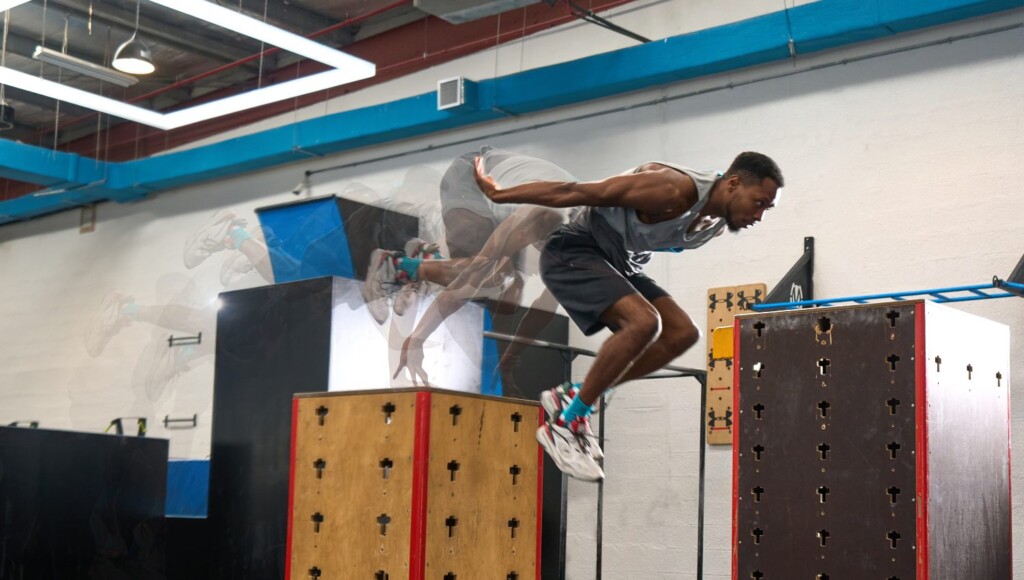
Most approaches to reducing fear of heights focus on the mind alone, but parkour training goes further. It builds physical strength alongside mental resilience, and that combination changes everything.
3.1 The Parkour Philosophy and Mindset
Parkour, at its core, is about moving through any environment efficiently, safely, and sustainably.
Two mottos shape everything in parkour training:
First, “être fort pour être utile,” which means, “be strong to be useful.”
Second, “être et durer,” meaning “to be and to last.”
Elite traceurs train to move skillfully for life. At Gravity Calisthenics Gym, that same principle drives every parkour training session. We focus on steady progression, smart risk control, and genuine mastery over the environment.
3.2 How Parkour Differs from Traditional Fear Treatment
Most conventional therapies tackle fear of heights through exposure alone, repeating it until it fades. Parkour training shares that foundation but adds something crucial: real, physical competence.
Instead of overwhelming you with your fear, it builds genuine skill alongside confidence, step by step. The results in earned mastery, not borrowed courage.
3.3 The Competence Confidence Loop
As your physical skill increases, your mind trusts your ability to handle height. This cycle is called the “competence-confidence loop.” Every skill you master and every landing you nail sends your nervous system the same message: you’ve got this. In other words, the more control you build, the calmer you become.
3.4 What Professional Traceurs Know About Fear
Experienced traceurs, including Gravity DXB’s coaching team, treat fear with respect. They use a strategy called “breaking jumps,” where you move up to bigger challenges only after repeated success at lower ones.
Every session involves honest assessment, deliberate rehearsal, and controlled risk. Visualization and breathing techniques happen before every move. No shortcuts, only methodical progress.
3.5 Transferable Benefits Beyond Parkour
Once you earn your height and movement confidence, you’ll also notice improvements in hiking, climbing, adventure sports, and handling regular life in Dubai’s high-rises. Better body awareness and mental steadiness spread to all kinds of challenges, including work and school performance.
Coach Insight: “Most people try to think their way out of height fear. At Gravity Calisthenics Gym, we build physical competence first. When your body proves it can handle the environment, your mind has no choice but to follow.”
4 Physical Foundations to Build Ground-Level Mastery
Developing ground-level strength is the base. This is where most of the work happens for conquering the fear of heights with parkour.
4.1 Balance Training Fundamentals
Start simple, such as single-leg stands, tandem stance holds, and eyes-closed balance work. Progress to a balance board or wobble cushion, then walk tape lines and low rails on the ground.
Once that feels solid, move to real rail walking with slow head turns and look-around drills. Adding vestibular training, deliberate head movement exercises, sharpens your body’s sense of position in space.
4.2 Landing Mechanics That Build Body Trust
Proper landings reduce injury risk and offer safety at height. Touch down on the balls of your feet, bend your knees, hinge at the hips, and use your arms to balance. Incorrect landings, such as heels striking first or locked knees, cause discomfort.
Drill spot landings on markers, gradually increasing distance. Learn the parkour shoulder roll on grass or gym mats until it becomes a reflex. It’s your safety net if anything goes wrong at height.
4.3 Grip Strength and Upper Body Preparation
To feel safe at height, develop a strong grip and upper body. Practice dead hangs and active hangs, aiming for 10 to 60 seconds as you improve.
Gradually try single-arm holds and controlled swings. Progress to pull-ups, using resistance bands if needed, then add horizontal rows and advanced moves like muscle-ups.
Wrist curls, finger exercises, and towel hangs all help you build a reliable grip. It’s a huge psychological anchor at height. Knowing your hands won’t let go, even in a recovery situation, takes a significant edge off height anxiety.
4.4 Core Stability for Spatial Awareness
Your core controls your center of gravity. At height, that control is everything. Build it with hollow body holds, dead bugs, Pallof presses, and hanging leg lifts.
Use carries and rotational stability drills. Mix in L-sits, hanging leg lifts, and accumulate time in positions that challenge your control. Always focus on keeping the core tight during movement.
Mastering these parkour fundamentals gives peace of mind long before leaving the ground, and sets the stage for higher-level parkour training in Dubai.
Coach Insight: “We see athletes rush to height before their grip strength is solid. That’s backwards. Your hands need to know they won’t let go before your brain will trust you at elevation. Master the ground first.”
The 10 Step Progressive Height Exposure System
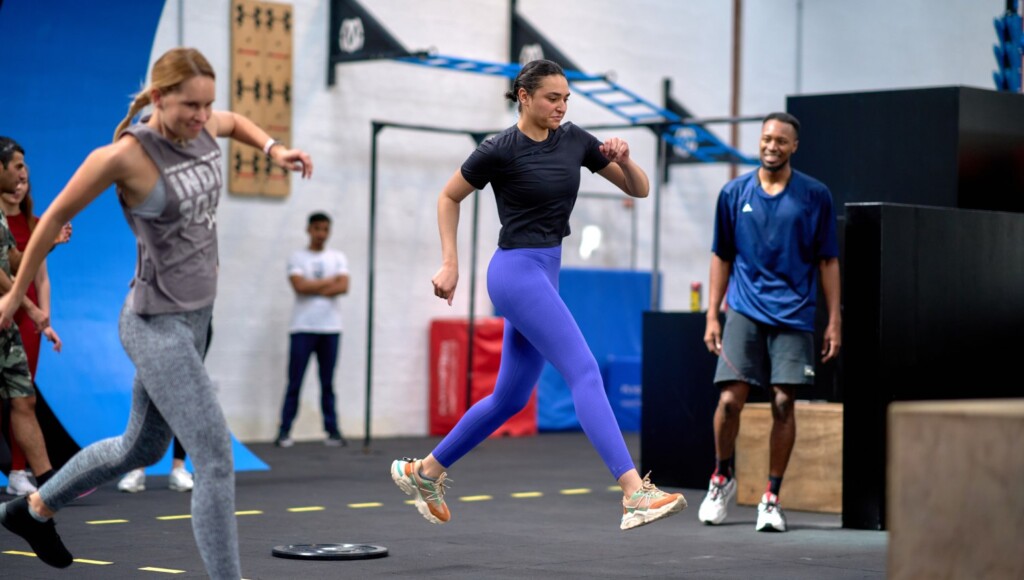
A step-by-step progression makes overcoming fear of heights realistic and safe. Here’s what it looks like, with timing based on regular practice (at least twice per week):
Step 1: Mental Foundation and Visualization Training (Week 1)
Before you move an inch off the ground, train your mind first. The mental game is half the battle, and it’s where most people skip ahead too fast.
- Spend 10–15 minutes daily visualizing yourself calm and confident at any height
- Master box breathing: inhale 4 counts, hold 4, exhale 4, hold 4
- Practice breathing under mild stress so it’s available when you need it
- Start a fear journal to log triggers and track progress
- Use affirmations: “I am capable at any height,” and repeat before every session
Step 2: Ground Level Movement Mastery (Weeks 1–2)
Ground-level training is where true confidence is built, one clean movement at a time.
- Walk the floor lines and jump between marked landing spots
- Practice soft landings from curb height with proper landing mechanics
- Roll on mats or grass until the movement feels automatic
- Work bear walks, crawls, and simple vaults over gym boxes
- Hold the balance on the lines for at least 60 seconds without losing control
Step 3: Low Rail and Curb Confidence (Weeks 2–3)
Move to 6–12 inch elevations like benches, curbs, and low rails, where your nervous system starts adapting to height.
- Stand, balance, and make small jumps onto low surfaces with eyes forward
- Practice pivots, direction changes, and simple turns on low rails
- Use box breathing before each movement, every time
- Focus your vision on a target ahead, not the ground below
- Repeat your affirmations during training, not just before it
Step 4: Knee to Waist Height Challenges (Weeks 3–4)
Welcome to the mild discomfort zone (18 to 36 inches). This is where your exposure begins, and breathing becomes your most important asset.
- Stand, squat, and sit on waist-high surfaces
- Practice cat balancing (hands and feet on rail) across short spans
- Work small precision jumps at this height, no forceful leaps yet
- Build time at height, aim for up to 5 minutes without tension
- Learn these smooth movements without rushing
- When discomfort shows up, breathe through it and remind yourself: “This is manageable.”
Step 5: Waist to Chest Height Mastery (Weeks 4–6)
When you reach 3–4 feet in parkour training, fear tends to make a comeback. That’s normal, and it’s exactly why you’ve been building the tools to handle it.
- Climb onto walls, descend carefully, then repeat, because repetition builds trust
- Practice short cat hangs with feet hanging freely from an edge
- Only attempt drops once landing mechanics are fully locked in
- Use a pre-move ritual, like breathing, visualizing, then committing
- Review your fear journal because your progress is real, even when it doesn’t feel like it
Step 6: Above Head Height Introduction (Weeks 6–8)
Crossing the psychological barrier of being higher than your own standing height is a critical moment. Respect it and prepare accordingly.
- Start your above-head parkour training with wall runs, which means running at a wall, and grabbing an edge above head height
- Practice tic-tacs, hangs, and traversing at 5–7 feet
- Always use a spotter or coach at this stage, and never train alone
- Use padded mats and stick to movements already mastered at lower levels
- Trust your trained landing mechanics because they exist for exactly this moment
Step 7: Multi-Body Length Heights (Weeks 8–10)
At 7–10 feet, the stakes are higher. However, careful planning and honest self-assessment become as important as physical skill.
- Plan your route before climbing, and know your entry and exit
- Combine techniques, such as climb-ups, traverses, and longer hangs
- Introduce lache swings at lower heights before advancing
- Always scan for stable surfaces, hazards, and your own energy levels
- Know when to climb down. Finishing a session early is smart, not weak
Step 8: Outdoor Environment Adaptation (Weeks 10–12)
The gym prepared you; now it’s time to test those skills outdoors. Outdoor parkour training introduces variables no gym can fully replicate.
- Train on concrete, metal, and wood at heights you’ve already mastered indoors
- Always validate surfaces for firmness and scan for exit routes
- Test skills in varying light and moderate weather conditions
- Explore Dubai’s urban landscape, but always respect local rules and property
- Have a backup plan before every session outdoors
Step 9: Dynamic Height Movement (Weeks 12–16)
This is where it starts to feel like flow. Speed, creativity, and dynamic parkour movement replace hesitation. Your fear takes a back seat.
- Link movements such as running jumps, vaults, landings, and rolls in sequence
- Train quick, calm reactions to learn to improve speed without panic
- Move through challenge routes, solving for efficiency and safety
- Keep breathing steadily, even as the pace increases
- Only progress to advanced movement skills when current ones feel genuinely smooth
Step 10: Mastery Maintenance and Continuous Progression (Ongoing)
Reaching this point isn’t the finish line; it’s the beginning of something better. Long-term parkour practice keeps your confidence sharp and your skills growing.
- Maintain a minimum of twice-weekly training to hold your gains
- Keep updating your fear journal because wins and setbacks both matter
- Teach someone else what you know, since sharing skills cements them
- Branch into climbing, gymnastics, or local parkour events for variety
- Stay curious, there’s always a new challenge worth working toward
Coach Insight: “The biggest mistake we see is skipping steps. Every traceur who plateaus or regresses did the same thing: they jumped ahead before earning the current level. Patience isn’t optional in height training.”
8 Essential Mental Techniques Parkour Athletes Use at Height
Mental skills are key, especially when anxiety returns at new heights. Adopt these techniques for real progress:
1. Box Breathing for Instant Physiological Calm
Breathing exercises for fear don’t get more effective than this. The 4-4-4-4 box breathing method, inhale for 4 counts, hold for 4, exhale for 4, hold for 4, directly resets your nervous system and dials down adrenaline. Train this while sitting, then standing, and finally under stress or at height. As you improve, slow the count for an even deeper sense of calm.
2. Strategic Focal Point Selection
One of the most underrated focus techniques in parkour is knowing exactly where to look. Fixating visually on your target reduces panic. Looking down often triggers vertigo or uncertainty, so pick a spot at the end of a rail, wall, or landing marker. Lock your gaze and let peripheral vision handle the rest.
3. Progressive Muscle Relaxation at Height
Scan your body for tension before attempting a move. Pause and “squeeze and release” key muscle groups, including shoulders, hands, jaw, and feet. Couple this with box breathing for maximum effect. Practice this drill until it only takes ten seconds.
4. Cognitive Reframing Scripts
Use cognitive reframing to reduce anxiety. Catch negative self-talk and reframe: “I might fall” becomes “I control my movement.” “This is too high” changes to “I’ve trained for this.” Write out three personal affirmations in your journal and speak them out before moves.
5. The Pre-Movement Ritual
Every serious parkour athlete has one. Breathe, visualize the move, scan your body, then fire your personal cue, it can be a word like “Go” or “Strong.” Watch any experienced traceur before a serious attempt, and you’ll spot it. These confidence-building exercises work because they create a reliable mental state on demand.
6. The “Done It Before” Memory Bank
Recall your previous successes. After any strong session at height, take a moment to log it, review footage, or simply acknowledge what you did. On tough days, look back and use those memories to boost confidence.
7. Commitment and Decision Clarity
Indecision is dangerous at height. Parkour demands a clear go or no-go decision. Either commit or don’t attempt the move, and make that decision before the move, not during it. Be willing to walk away without shame. This protects you against hesitation-related mishaps.
8. Recovery and Reset Protocols
If a spike of fear happens, step back. Use box breathing and body scan, speak supportive words to yourself, and decide honestly if you’re ready for more. Sometimes, the most productive day is one where you.
Coach Insight: “Box breathing isn’t just for beginners. Our advanced athletes use it before every serious attempt. The difference between being good and great at height is who controls their nervous system better, not who’s braver.”
8 Common Mistakes That Keep People Trapped in Height Fear
Progress in parkour training isn’t just about what you do, it’s about what you avoid. These eight mistakes are the most common reasons people plateau or give up entirely.
- Rushing Through Progressions: Skipping stages leads to negative experiences that reinforce fear. If anxiety spikes, slow down, master each level, and earn the next one.
- Training Without Qualified Guidance: Practicing at height without a coach, spotter, or experienced partner can be risky. Proper support brings safety and psychological comfort.
- Neglecting Mental Training: It isn’t only about the body. Forgetting regular breathing, visualization, and self-talk delays progress. Schedule mental skill work like any sport technique.
- Inconsistent Training Leading to Regression: Comfort with height fades quickly if not maintained. Set a minimum of two sessions weekly and do small daily balance, breathing, or core drills to avoid setbacks.
- Comparing Progress to Others: Everyone’s journey through parkour training is unique. Social media highlight reels can look deceptive. Focus on your goals, not someone else’s pace.
- Ignoring Physical Preparation: A weak grip or core can reinforce fear. Build a foundation first, check for any persistent pain, and increase strength as you move upward.
- All or Nothing Thinking: Bad days or setbacks do not erase growth. Use them to spot weak spots. Regression, at times, is normal and helps you build resilience.
- Neglecting Recovery and Sleep: Tiredness is one of the common overtraining symptoms, and it amplifies anxiety. Prioritize rest, eat well, and hydrate. Listen to your body when it wants a break from height training.
Safety Protocols and Equipment for Height Training
Training smart isn’t optional at Gravity Calisthenics Gym. It’s the foundation everything else is built on.
Gym-Based Training Advantages
A controlled gym environment offers padded surfaces, reliable structures, and climate comfort. Gravity DXB’s facilities include walls, bars, mats, and platforms for stepwise height progression. Coaches are always nearby for spotting and quick intervention. Beginners, youths, and families are urged to start safe height training indoors.
Appropriate Gear and Attire
Footwear needs a secure grip, so avoid slippery soles or heavy boots. Choose shoes meant for parkour with flexible, light rubber. Wear fitted clothing that does not snag on surfaces. Each season in Dubai has different clothing demands, so make sure to adapt. Some may use soft elbow or knee pads at first. It’s optional but helpful.
Spotter Protocols and Partner Training
Spotters are crucial above knee height or during early gym training in Dubai. A good spotter positions their hands ready, gives clear signals, and assists you with recovery if needed. Partner training adds safety and accountability. Pick partners who are attentive and honest.
Outdoor Training Site Assessment
Outdoor training safety starts with a thorough inspection of all surfaces for structural integrity before each session. Avoid wet, loose, or sharp surfaces. Scan for environmental hazards, such as heat, rain, sand, and debris. Dubai has rules about using public space. Respect boundaries and always train with a phone for emergencies.
Emergency Preparedness
Have basic first aid knowledge. Know when bumps and scrapes are manageable and when to get medical help. Carry a phone and check emergency contacts. Kids can also build confidence through movement. But if you’re training with young students, communicate with their parents and keep their emergency contacts handy. Always plan for exit strategies.
Coach Insight: “Enforce spotter protocols above knee height, no exceptions. It’s not about a lack of trust in your ability as an athlete. It’s about removing the mental load of ‘what if’ so you can focus entirely on execution.”
The Role of Community and Expert Coaching
No matter how strong your mindset or how solid your technique, going it alone in parkour training will only get you so far. You need fitness community support throughout this journey.
Why Training Alone Limits Progress
Group training keeps you accountable and motivated. Watching a peer nail a tough move sparks the “if they can, I can” mindset. Others spot you, offer real-time feedback, and push you through rough patches.
The Value of Qualified Parkour Coaching
Gravity DXB’s expert coaches help you catch technical errors before they become bad habits or injuries. They read your readiness better than you can, adjusting your progression and knowing exactly when to push and when to pull back.
Finding Your Training Community
A strong parkour community in Dubai is both a safety net and a growth accelerator. Look for groups that value smart progression over risky showmanship, such as local classes, online forums, or small training pods. Gravity Calisthenics Gym runs regular community events with access to world-class traceurs.
The Gravity Calisthenics Gym Approach
At our gym, every class is structured, judgment-free, and built for all levels. Expert direction, an open, welcoming space, and a high-intensity team culture create exactly what every parkour practitioner needs: a consistent, supportive place to face challenges head-on.
Start Your Journey from Fear to Freedom Today
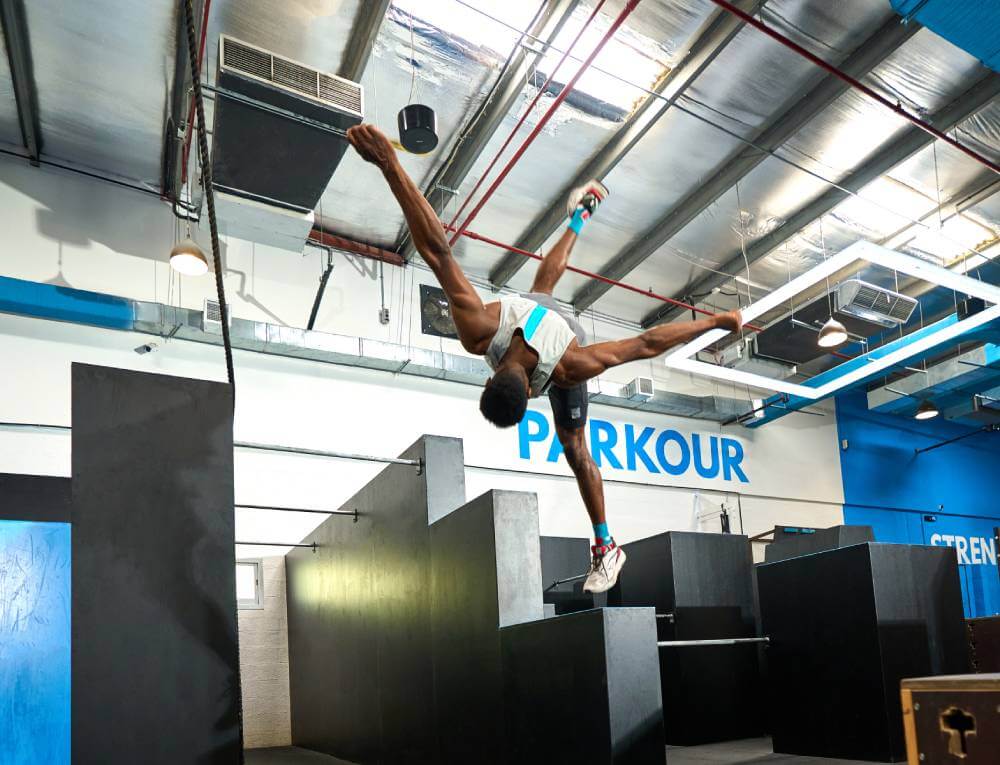
Fear of heights is common, but it’s not permanent. Through structured parkour training at our gym, you’ll move from anxiety to confidence, using a system proven by elite athletes and everyday members alike. Your body and mind can become steady at any elevation.
Whether it’s sightseeing the city’s skyline, taking on adventure sports, or simply feeling unshakeable in daily situations, the confidence you build through parkour training in Dubai carries everywhere.
Remember, every professional once had nervous hands and a racing heart. What changed wasn’t the fear. It was the response. Start with one breath, one step, one parkour training session, and let the rest follow.
Ready to overcome acrophobia for good? Book a trial parkour class and join a fitness community built for real, lasting progress.
Frequently Asked Questions
How long does it realistically take to overcome the fear of heights using parkour?
Most people see meaningful change in twelve weeks with twice-weekly parkour training and daily mindset work. Significant comfort at moderate heights typically develops between weeks eight and sixteen. However, progress is ongoing, where consistency is everything.
Do I need to be physically fit before starting parkour training for height fear?
No advanced fitness is required. The foundation steps include balance, grip, and landing practice. These work at every level, and our parkour training in Dubai adapts drills to your current condition. Getting fitter is part of the journey.
Is parkour training safe for someone with a severe fear of heights?
When you work with a qualified coach, use gym-based environments, and follow stepwise progressions, parkour training is safe and effective even for those with strong height anxiety. Do not skip steps, and prioritize mental work early.
What age range is appropriate for this type of training?
All ages are welcome. We work with students aged six and up. Kids, teens, and adults all thrive at our parkour training in Dubai, with programs customized to their developmental stage, goals, and current ability level.
Will conquering the fear of heights help with other fears and anxieties?
Yes, this acrophobia training builds mental control, body awareness, and resilience that carry over to many other fears. Members regularly report stronger confidence in everyday life.
Can parkour training help my child overcome the fear of heights?
Yes, children’s classes focus on safety, incremental exposure, fun, and community support. Kids build physical skills, social confidence, and courage in a supportive environment guided by expert coaching.