
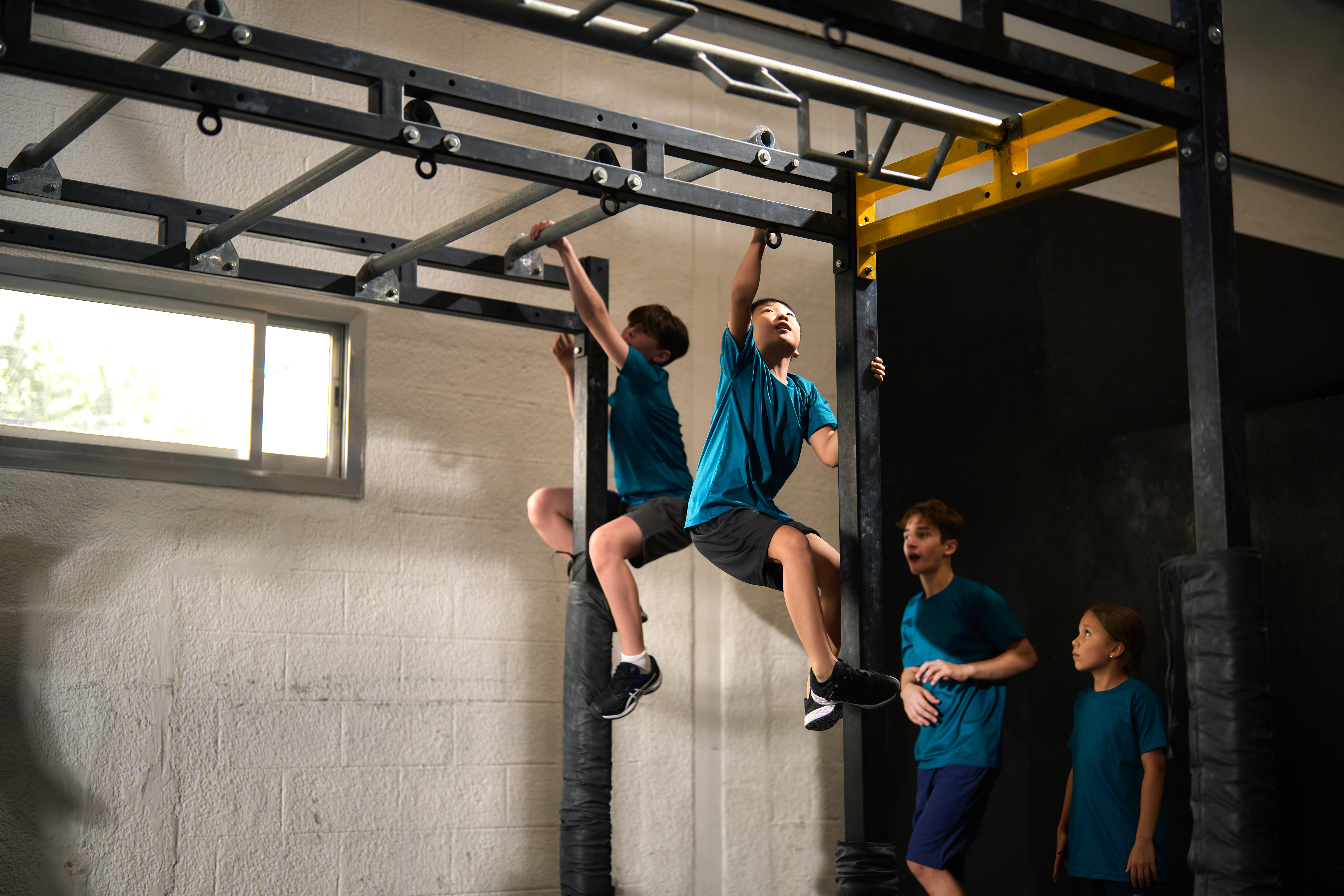
Watching your child vault over an obstacle for the first time, land cleanly, and then look back at you with that massive grin, that’s the moment parents understand why parkour is so much more than a physical activity. It’s a confidence builder. A problem-solver’s playground. A discipline that quietly teaches children how to assess risk, trust their bodies, and keep trying when something feels hard.
If your child has recently joined a parkour class in Dubai or you’re considering enrolling them, your role as a parent matters more than you might think. Not in a hovering, anxious way, but in a genuinely supportive kids in parkour kind of way that reinforces what coaches are building in the gym. Here’s how to make the most of that partnership.
Understanding What Parkour Actually Teaches
A lot of parents come to us at Gravity Calisthenics Gym with a version of the same worry: “Isn’t parkour dangerous?” It’s a fair question. The short answer is that when taught by qualified coaches in a structured environment, parkour is among the safest and most developmentally valuable physical activities children can do.
Parkour builds what functional fitness experts describe as real-world movement competency: balance, spatial awareness, landing mechanics, and the ability to control the body under dynamic conditions. These aren’t just gym skills. They’re life skills.
The Physical Benefits Go Deeper Than You’d Expect
Children who train in parkour regularly develop:
- Core strength and stability from constant balancing and controlled landings
- Coordination and body awareness built through varied movement challenges
- Cardiovascular endurance that improves without feeling like “exercise”
- Injury resilience, because good parkour coaching prioritises safe technique before progression
The Mental Game Is Just as Important
Our coaches consistently observe that kids in parkour classes develop sharper focus and greater emotional regulation over time. When a child stands in front of an obstacle they’re not sure they can clear, they’re learning to manage fear, break a challenge into steps, and commit to a decision. That process builds genuine confidence through movement, the kind that transfers directly into school, friendships, and future challenges.
Research published via the National Institutes of Health supports the connection between structured physical activity and improved cognitive function in children, reinforcing what we see on the gym floor every week.
Your Body Can Do More Than You Think.
Practical Ways to Support Your Child’s Progression
Great coaching gets kids 70% of the way there. The other 30% is built at home, in conversations, and through how you frame the experience. Here’s what actually works.
Talk About Progress, Not Performance
One of the most common parent tips we share is to shift the dinner table conversation away from “Did you do the big jump today?” and toward “What did you work on?” or “Was there anything that felt easier than last week?” This reframes success as a process, not a result. Children who feel that their effort is valued, not just their outcomes, tend to persist longer and push through harder plateaus.
Respect the Pace of Progression
Parkour is a progression-based discipline. Coaches structure skills in deliberate sequences, and there’s a reason a child might spend three sessions working on a precision jump before being introduced to a higher obstacle. Pushing your child to advance faster than their coach recommends can undermine the confidence and technique that make parkour safe and sustainable.
Patience is a form of encouragement. When children know that the adults around them trust the process, they do too.
A Simple Parent Support Framework
| What to Do | What to Avoid | Why It Matters |
|---|---|---|
| Ask about what they learned, not what they achieved | Comparing to other children in the class | Builds intrinsic motivation |
| Celebrate small wins enthusiastically | Downplaying a skill because it looks “easy” | Reinforces effort and progression |
| Communicate openly with their coach | Coaching technique from the sidelines | Keeps instruction consistent |
| Let them lead the recap of class | Minimising fear or nervousness they express | Builds emotional intelligence and ownership |
Create Space for Practice (Without Pressure)
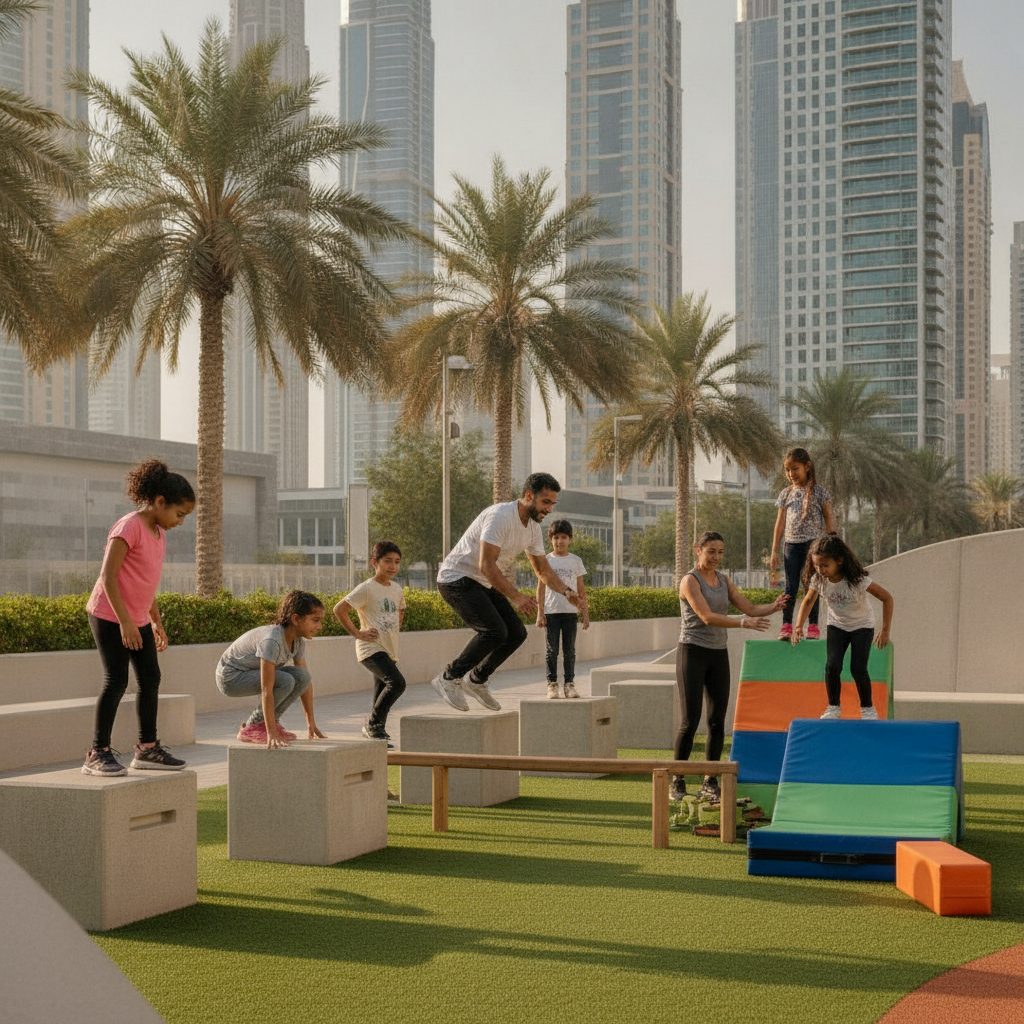
If your child wants to practice balancing on a low curb or rolling on the grass at the park, let them. These informal movement moments are where parkour principles get genuinely internalised. Don’t turn it into a training session, just let curiosity lead. Unstructured play that mirrors parkour movement is one of the most natural forms of supporting kids in parkour outside the gym environment.
Building a Long-Term Relationship With Movement
The children who thrive in parkour over the long term aren’t always the most naturally athletic ones. They’re the ones whose families treat the activity as part of a lifestyle, not just a class on the schedule.
Get Involved in the Community
At Gravity, we’ve built something that goes beyond reps and technique. There’s a genuine community here, and kids feel it. Attending events, cheering at showcases, and connecting with other families deepens your child’s sense of belonging to something meaningful. Check out our events and workshops to see what’s coming up and where you can join in.
Address the “I Don’t Want to Go Today” Moments Thoughtfully
Every child hits a patch where motivation dips. Before assuming it’s time to quit, ask a few gentle questions. Is there a specific skill that’s frustrating them? Is something social going on? Sometimes a quick chat with their coach reveals a simple solution. Quitting when something gets hard teaches a very different lesson than working through a difficult patch and coming out the other side.
That said, if a child’s resistance is persistent and specific, listen. The goal is a healthy, long-term relationship with movement, not compliance.
Think Beyond the Beginner Phase
As the global fitness industry continues to expand (the fitness sector has seen sustained growth in participation across all age groups), specialised disciplines like parkour are increasingly recognised as legitimate athletic pathways. Children who start young and build solid foundations can progress into competitive movement sports, obstacle course racing, or coaching roles themselves.
We already see this trajectory at Gravity. Kids who joined our classes years ago are now pushing into advanced calisthenics training and preparing for real events. The investment you make now has a very long runway. To avoid common pitfalls as your child advances, it’s worth reading about mistakes to avoid before a fitness competition, which applies just as much to young athletes.
The counterargument some parents raise is that specialising in one activity too early can limit a child’s overall athletic development. This is a reasonable concern in some contexts, but parkour is actually one of the rare disciplines where broad physical literacy is the product of the training itself. It doesn’t narrow a child athletically. It opens them up.
Your child chose parkour because something in it called to them. Your job is to keep that spark alive, stay curious alongside them, and trust the process that qualified coaches have built with care. That combination is unbeatable.
Still Thinking About It? Just Book It.
Frequently Asked Questions
What age is best for a child to start parkour classes?
Children can start parkour as young as five or six years old. At this age, classes focus on foundational movement skills like balance, rolling, and spatial awareness rather than complex jumps. Most structured youth parkour programs place kids into age-appropriate groups, so there’s no real advantage to waiting past age seven or eight.
How many classes per week does my child need to see real improvement?
Two sessions per week is the sweet spot for consistent skill development without fatigue or burnout. One class keeps skills ticking over but progress is slower. Three or more sessions per week can be introduced once a child is past the beginner phase and genuinely motivated to advance.
Do I need to buy special gear or equipment for my child’s parkour training?
No specialist equipment is needed to start. Comfortable, close-fitting athletic clothing and a pair of flat-soled trainers with good grip are sufficient for beginners. Coaches will advise on specific footwear upgrades only when a child progresses to more technical outdoor or competition-oriented training.