
HYROX is now the fastest-growing fitness racing worldwide.
In 2025, they operated in 11 countries and brought $140m in revenue.
Dubai is no exception, with people of all ages, backgrounds, and fitness levels showing up to test what they are made of. You are signing up for 8 kilometers of running, mixed with 8 demanding workouts in HYROX competitions.
It’s not easy, but that’s exactly the point. And if you want to perform your best, only strategic functional strength training will get you there. HYROX training means building the right skills for every single stage, with purpose behind every session.
This post walks you through the workouts you need to get there. But first, let’s quickly break down what the HYROX challenge actually is.
The HYROX Challenge: What Does It Take to Finish Strong?
Started by two-time Olympic gold medalist Moritz Fürste, HYROX consists of eight rounds, each beginning with a 1-kilometer run, followed by a workout station.
- SkiErg: Mimic cross-country skiing for upper body power.
- Sled Push: Push heavy sleds to test leg strength.
- Sled Pull: Pull sleds to challenge your back and arms.
- Burpee Broad Jumps: Explosive jumps to boost agility and endurance.
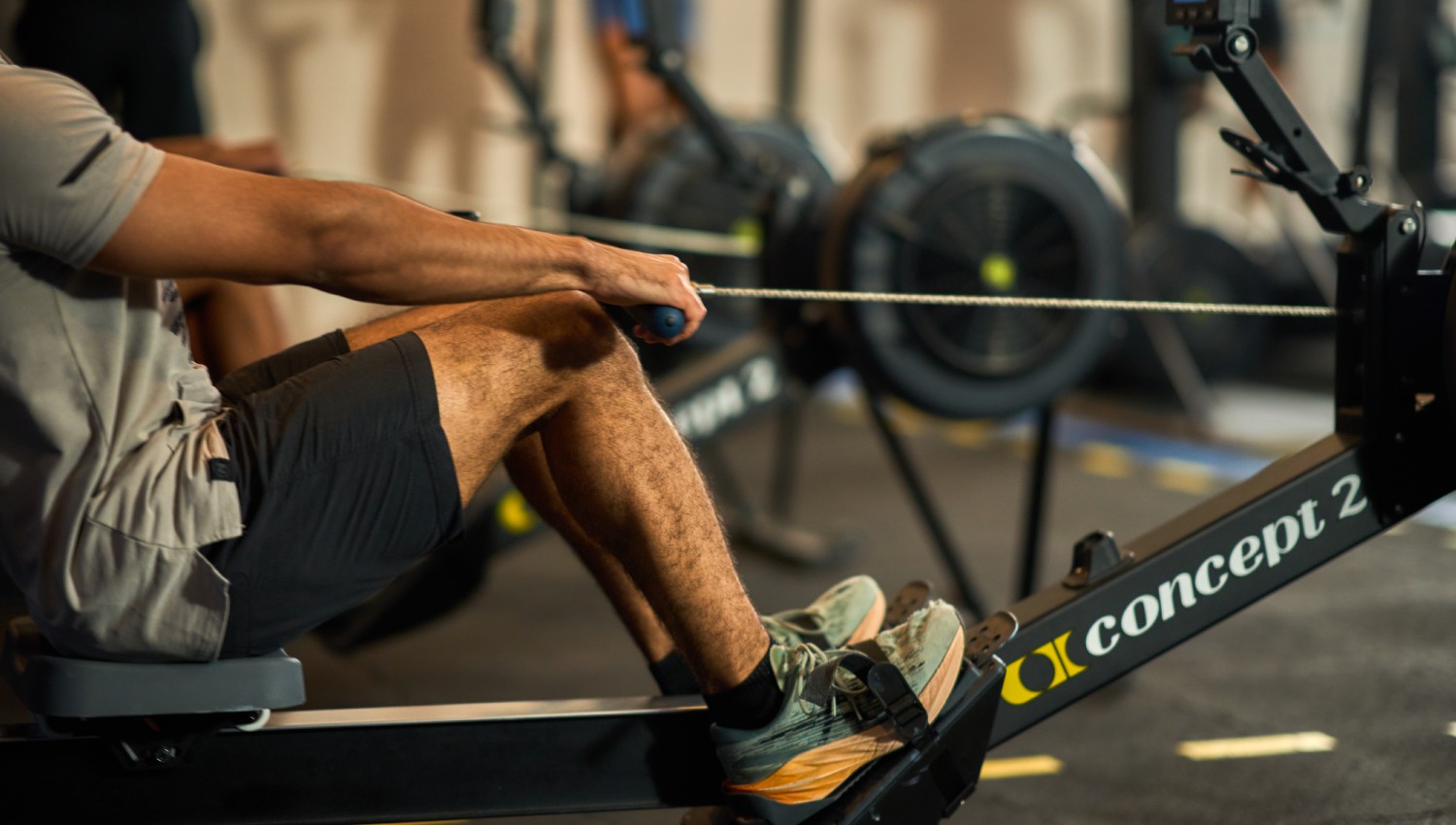
- Rowing: Use rowing machines to engage full-body strength.
- Farmers Carry: Carry heavy weights to build grip strength.
- Sandbag Lunges: Lunge with sandbags for leg power and stability.
- Wall Balls: Throw balls to enhance coordination and strength.
Every competitor tackles endurance runs, then must immediately perform at peak strength and agility. These transitions are unforgiving for the hesitant, while the swiftest athletes have pacing plans and skills for each segment.
Smart, strategic HYROX training consistently outperforms sheer grit. Your preparation should reflect the course’s structure and demands, making you ready for every workout station and unexpected fatigue.
The 8 Must-Try Workouts
At the Gravity Calisthenics Gym, HYROX training is approached with a method defined by a strong athletic background and grounded in reality. community experience. These eight workouts target every challenge you will face on race day.
1. SkiErg Interval Blasts
The first station always tests you, with 1,000 meters of explosive pulling on the SkiErg. Your arms, core, and aerobic capacity all work in sync here. Too many athletes make the mistake of pulling with arms alone and burning out early.
The key is driving through the hips and engaging the lats, making the movement far more powerful and controlled. For this functional movement training, work through 250-meter all-out intervals with 30 seconds of rest, for 6 to 8 rounds.
Over time, build up to holding 1,000 meters straight at competition pace. This approach builds not just pulling power, but genuine race-specific upper body cardio resilience. During your SkiErg training, remember to master the technique before chasing speed.
Coach Insight: “Most athletes blow up on the SkiErg because they treat it like a pure arm exercise, but it’s not. Once you learn to load your hips and feel your lats engage, the whole movement clicks. Get the technique right first, and the speed will follow naturally.”
2. Heavy Sled Push Drills
The HYROX sled push is where you are likely to lose your edge. You are pushing a sled for 50 meters under heavy resistance, and it’s tougher than it looks, both mentally and physically.
For HYROX sled training, practice with 25-meter heavy pushes, resting 45 seconds between efforts, for 6 to 8 rounds. Technique is everything here, which involves staying low, driving from the balls of your feet, and keeping your breathing steady throughout.
Every two weeks, add weight to the sled to keep the progress coming. Leg drive does the heavy lifting, but it’s pure determination in these sets that truly helps you on race day.
3. Rope Sled Pulls
The sled pull is a brutal 50-meter test, which involves dragging a weighted sled hand-over-hand with a rope until grip and posterior chain strength wave the white flag first.
You need proper sled pull training that begins with 25-meter pulls at a steady, controlled pace, 40 seconds rest, 6 to 8 rounds. Plant those feet firmly, sit back into the hips, and let the legs and arms work together for a true full-body effort.
To keep that grip ironclad during rope pulling, weave in accessory work like dead hangs and heavy farmer holds throughout the week. And since you are training in Dubai, pay more attention to your hand and grip strength, because fatigue hits you differently in the heat and humidity.
4. Burpee Broad Jump Complexes
The 80 meters of burpee broad jumps are always late in HYROX and catch people off guard, especially when they are already tired. This is a full-body test where only good recovery between jumps keeps your pace steady.
For full body conditioning, practice 10 continuous burpee broad jumps, rest for 25 seconds, and repeat 4 to 6 sets. Use the momentum from standing back up to explode forward, but land softly to protect your joints and save energy. Run a few intervals or stations before doing these in training because fatigue simulation prepares your body for the competition.
Coach Insight: “This station breaks people mentally more than physically. By the time you hit it, you are already running on fumes, and that’s exactly why you train it tired. Practice it after a hard run or two stations, and race day will feel familiar instead of shocking.”
5. 1000m Rowing Repeats
At the HYROX rowing station, you are required to row 1,000 meters, which means form and pacing make all the difference. Start with 500m rowing intervals, 90 seconds rest, and four rounds. On some training days, switch to 2,000m steady rows for aerobic capacity.
Teach yourself to drive with the legs first, then open the hips, and finally finish with an arm pull. This reduces energy loss and keeps your numbers steady. In HYROX, you usually row after several tough workout stations, so perfect your rowing technique straight after running to see how competition fatigue affects your breathing and rhythm.
6. Loaded Farmers Carry
Farmers carry in HYROX is a 200-meter walk with heavy kettlebells or dumbbells. At this workout station, your grip might give out first, so focus on that during training.
Start your farmers carry training with 50-meter laps, rest shortly, and then build up to 100-meter unbroken sets over the weeks. Keep your shoulders back, brace your core tight, and walk with quick steps for better efficiency.
Add accessory grip work such as dead hangs, plate pinches, and heavy kettlebell holds. These exercises are key for anyone serious about dominating this station without dropping the weights.
7. Sandbag Lunge Progressions
Walking lunges with a heavy sandbag (held on the shoulder) for 100 meters demand both single-leg strength and balance. If you want to be a strong finisher, you have to train for both.
To train for the HYROX sandbag station, start with 20-meter sandbag walking lunges, 45 seconds recovery, and 6 rounds. Add weight as your technique improves.
Keep your torso upright, drive through the front heel, and switch the bag from one shoulder to the other halfway through. If you want more single-leg strength, Bulgarian split squats and weighted step-ups are excellent additions.
Coach Insight: “The sandbag lunge is a quiet confidence-builder. Athletes who train it consistently show up on race day standing taller, moving more smoothly, and finishing stronger than those who skip it. Don’t underestimate 100 meters with a bag on your shoulder, earn it in training first.”
8. Wall Ball Endurance Sets
The final challenge at HYROX is the wall ball workout. It includes 100 wall balls to finish your race. At this stage, your legs and shoulders are completely fatigued. So, when you are training, use 25-rep sets with 20 seconds rest.
Over time, build up to larger sets, and try for 50 unbroken reps if possible. Use strong hip drive to power the wall ball throw, then catch and drive smoothly with each rep. Focus on controlled breathing; if you hold your breath, you lose rhythm, which can slow you down and spike your heart rate.
Be consistent to develop your leg and shoulder stamina. Remember, the first 30 feel easy, but your HYROX training will carry you through the last 70.
Build Your Running Foundation

In HYROX competitions, running is non-negotiable because every station is linked by a 1 km run, adding up to 8 km in total. Running on fresh legs feels manageable, but race day will show you just how different it feels when fatigue sets in.
During your peak HYROX training, build a weekly running base of 20 to 30 km. Hit at least one tempo run per week at your goal race pace, and mix in interval sessions to sharpen your speed.
Brick workouts are also a game-changer. Wrap up a run and head straight into a station workout with zero rest. That’s how you train your body and your mind to handle competition fatigue and snap through transitions.
Above all, learn to recover while you are still moving, and trust yourself to know when to push and when to hold back across each kilometer. Build the kind of functional fitness that keeps you strong and steady as the race gets harder, so your pace never falls apart when it matters most.
Use This Sample Training Week Structure to Get Started
Only a well-structured HYROX preparation plan will get you through the competition. It helps you target every workout station with intention and build fitness progressively, not randomly. Without structure, even the hardest-working athletes plateau or peak too early.
You can use the sample weekly schedule below as your foundation to get started:
- Day 1: SkiErg and rowing (upper body stations), paired with running intervals.
- Day 2: Sled push, sled pull, and sandbag lunges (lower body stations) plus a moderate tempo run.
- Day 3: Active recovery – mobility, stretching, and light movement.
- Day 4: Burpee broad jumps, wall balls, farmers carry (full body stations), mixed with short run intervals.
- Day 5: Long slow distance run to build aerobic base and mental stamina.
- Day 6: Full HYROX simulation: complete all stations and running transitions.
- Day 7: Complete rest so your body and mind adapt.
Keep records of how you feel after each station, and adjust the plan based on performance. But above all, stick to your HYROX workout schedule. Consistency will help you win.
Coach Insight: “This structure works, but it works even better when you have the right coaches and equipment around you. At Gravity Calisthenics Gym, we run dedicated HYROX training sessions. If you are serious about race day, come train with us.”
Ready to Make HYROX Your Race?

HYROX is a test of fitness, endurance, and training. Every workout station you have read about here has a weak point, and targeted HYROX training is what turns those weak points into strengths. Whether it’s your grip on the rope pull, your breathing on the wall balls, or your pace through that final kilometer, training is what prepares you.
Gravity Calisthenics Gym is a leader when it comes to professional functional fitness in Dubai. Our coaches know the demands of HYROX competitions inside out, and our community will push you further than you would push yourself on your own. That combination of expert coaching, accountability, and a crew that genuinely wants to see you win; that’s what makes the difference when race day arrives.
If you are ready to stop guessing and start training with purpose, we’d love to have you in.
Book your free class now to see HYROX training in action.