
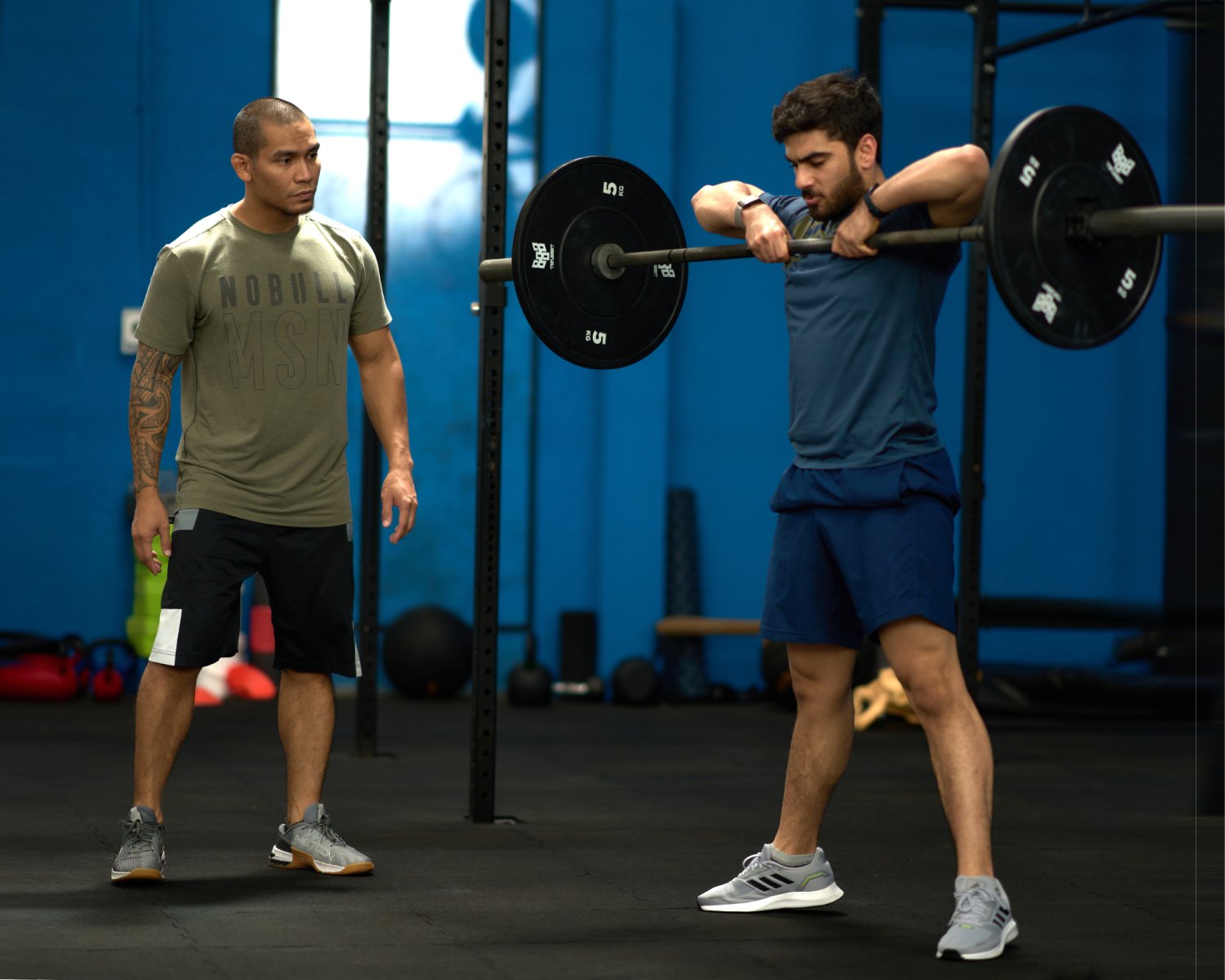
The dates for the Dubai Games 2026 have been declared.
You’ve probably started training for games that represent a city-wide celebration of performance, resilience, and community spirit. But preparing for one of the largest fitness events in Dubai calls for clarity, structure, and smart training habits.
In this comprehensive Dubai Games Preparation Guide, we will break down every part of the journey for athletes like you, who are gearing up for the big day. We’ll explain it all, from deciphering the games and competition format to structuring your training and recovery.
- What Are the Dubai Games
- Understand the Competition Format
- Create Your Competition Training Plan
- Build Your Movement Foundation
- Develop Competition-Specific Metabolic Conditioning
- Master Your Skills Even Under Fatigue
- Build Effective Team Training and Strategy
- Get Enough Nutrition for Training and Competition
- Follow Recovery Protocols That Actually Work
- Don’t Ignore Injury Prevention Training
- Set Your Competition Mindset
- Chalk Out Your Competition Week Strategy
- Stick to Your Competition Day Game Plan
- End with Post-Competition Recovery and Reflection
- How Gravity Supports Your Competition Journey
Ready? Let’s get started!
What Are the Dubai Games
The story of functional fitness competitions in Dubai began in 2018. Officially rebranded as the Dubai Games for its sixth edition, the event’s new identity reflects its growing international recognition and reach.
The biggest-ever edition took place in 2025 at Dubai Festival City, featuring 244 teams from across the world and distributing AED 3.35 million in prizes. This milestone edition marked a turning point, showcasing Dubai’s vision for large-scale, inclusive athletic competition.
Inside Dubai Games 2026
The upcoming Dubai Games 2026 will run from February 12 to 15, 2026, featuring four categories built to test all-around fitness:
- Endurance
- Strength
- Speed
- Skill
Each category pushes participants differently, demanding strategic balance over raw power. The team format (typically, four athletes per group) requires synergy and focused preparation.
The competition follows a waterfall-style format, meaning teams progress through events in sequence. It adds an element of pacing and tactical decision-making, separating Dubai Games from most traditional formats.
Who Competes and Why You Should Consider It
The Dubai Games stand as the biggest community fitness challenge in Dubai, attracting a dynamic mix of participants from across the UAE and beyond. We see teams joining from workplaces, government departments, clubs, and international cities.
Teams typically include:
- Battle of the Government (Men): All-male teams from UAE government entities.
- Battle of the Government (Women): All-female teams from UAE government bodies.
- Battle of the Community: Mixed-gender teams of UAE citizens and residents.
- Battle of the Cities: International mixed-gender teams representing global cities.
- Battle of the Juniors: Youth teams aged 10 – 13.
While competition drives motivation, the true value lies in the experience itself. Many participants join this functional fitness competition in Dubai to challenge personal limits, measure real progress, and connect with a community dedicated to fitness.
Understand the Competition Format
Before you step onto the competition floor, first, understand how it works. Dubai Games workouts are structured, and knowing their format helps you train with purpose.
Know the Dubai Games Workouts Structure
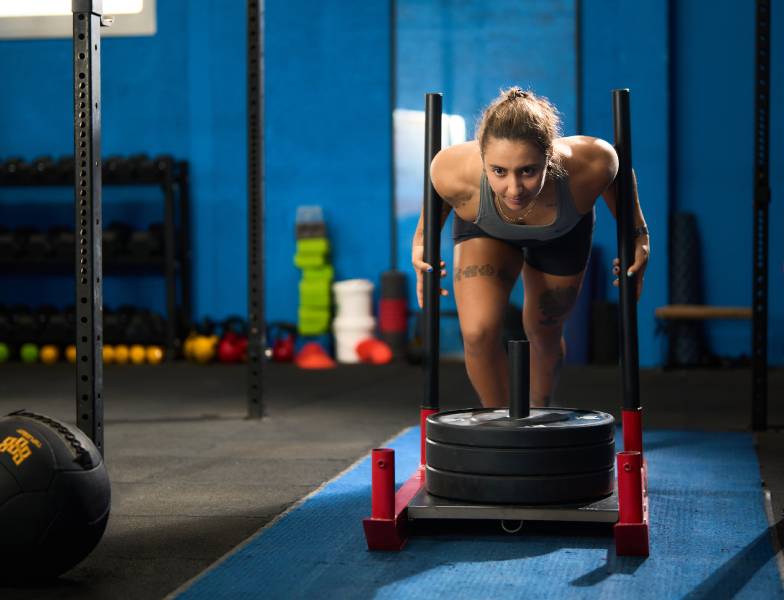
The Dubai Games workouts feature multi-station events designed to test endurance, coordination, and teamwork. Each station challenges a different set of functional fitness movements and athletic performance.
Each member of your team rotates through these stations. Most events last between five and fifteen minutes, demanding both stamina and efficient pacing.
The competition format follows a waterfall style, where each member from a team starts as soon as the previous one finishes their segment.
Functional Fitness Movements You’ll Face
Every team competes across multiple functional fitness movements designed to test total-body performance. Typically, this includes:
- Gymnastics: Pull-ups, muscle-ups, and handstand work push your upper-body control and precision to its limits.
- Metabolic Conditioning: Running, rowing, and assault bike intervals measure your cardiovascular endurance.
- Weightlifting: Kettlebells, barbells, and dumbbells test your explosive power and stability.
- Functional Exercises: Sled pushes, sandbag carries, and wall balls link real-world movement to competitive strength.
Given the variety in functional fitness movements, you need more balanced training instead of specializing. Teams that can switch between strength, speed, and technique efficiently usually outperform those relying on a single skill set.
The Calisthenics Advantage
Bodyweight mastery is at the heart of competing in the Dubai Games. Calisthenics training improves your control, balance, and functional strength, which translates across all event categories. Whether you’re moving from pull-ups to rope climbs or burpees to box jumps, body awareness reduces wasted effort and boosts speed.
If you’re focused on team-based fitness training, calisthenics also strengthens synchronization and stamina, and that shared rhythm can be the difference between winning and losing in a competition like this.
Create Your Competition Training Plan
Your competition training plan must focus on structured intent and balancing performance gains with proper recovery. With the right timeline, you can learn to peak at the right time.
Break down your training plan into these four phases:
The 12+ Week: Foundation Phase
The first stage establishes your base. A typical week in this training phase includes 3 – 4 strength sessions and 2 – 3 aerobic or skill-based workouts. Stay focused on core lifts, bodyweight control, and efficient movements. This is where your long-term progress begins and supports the heavier workload that follows.
The 8 – 12 Week: Sport-Specific Phase
This training phase introduces workouts for functional fitness programming seen in past competitions. Your intensity needs to increase while maintaining movement quality. Start combining endurance, skill, and power during the same session.
Typically, you can concentrate on workouts like interval-style team pieces, barbell cycling, and conditioning circuits under moderate fatigue. The goal is to improve your endurance without losing strength and developing adaptability under pressure.
The 4 – 8 Week: Competition Simulation Phase
By this time, your competition training plan should enter full simulations, testing transitions, pacing, and coordination. Repeating benchmark workouts helps you track your progress and make adjustments.
As this is a mock-drill training phase, team sessions will dominate it, which also gives you a chance to refine your communication and strategy. Identify your weaknesses and make targeted improvements before tapering begins.
The 2 – 4 Week: Taper and Peak Phase
This training phase should be about reducing your training volume but keeping the intensity high. Focus on your recovery, sharpness, and skill precision. Overloading at this point can weaken your peak performance. Instead, quality movements and lighter sessions will help you recover while staying geared up.
Another point to consider during this training phase is your mental conditioning. You can use visualization techniques, confidence routines, and reflection to support your mental focus and be ready for the competition day.
The Final Week Protocol
During the last seven days, avoid heavy lifting or high-volume conditioning. Instead, prioritize active recovery, mobility training, and light team drills. Put emphasis on rest, hydration, and consistent nutrition.
Schedule one short session mid-week to maintain your rhythm as a team, then shift fully into mental preparation. Establishing pre-event routines and visualizing movement flow will help you stay calm and focused on the competition day.
Coach Insight: We usually see athletes over-train close to events, trying to “cram” strength or endurance late in the cycle. Avoid this mistake. The taper period is for recovery and reinforcement, not for catching up. Trust your periodization for fitness events. Remember that peaking happens through rest, not overload.
Build Your Movement Foundation
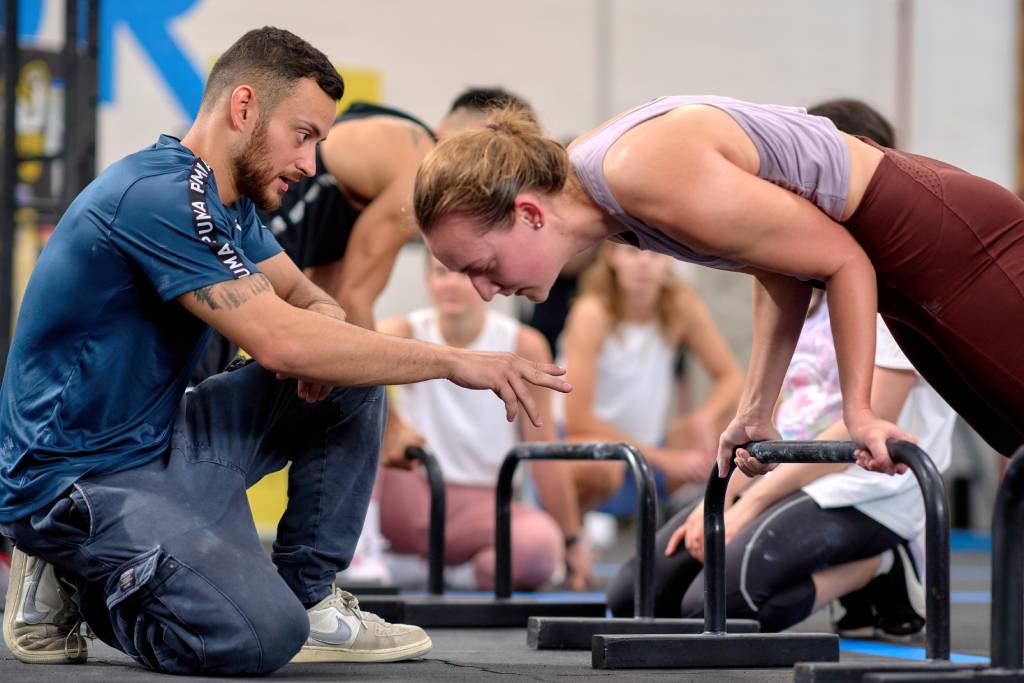
Building a movement foundation is a critical step in your calisthenics training for competition. It helps you maintain control, efficiency, and consistency even when you’re fatigued.
Your Bodyweight Mastery Comes First
Your success in the Dubai Games depends on relative strength. In a field where scaling walls or climbing ropes matters as much as lifting weights, bodyweight control typically separates the best from the good contenders.
Bodyweight strength training builds coordination and endurance that heavy lifting alone can’t provide. With superior movement awareness, your team can move faster between stations, saving precious seconds while staying composed.
Focus On Essential Calisthenics Progressions
Your calisthenics training must follow progressions that prepare your team for higher-skill gymnastics movements. Building them step by step also prevents injury and strengthens overall mechanics.
- Push Patterns: Move from standard push-ups to pike push-ups, then progress toward handstand push-ups.
- Pull Patterns: Develop horizontal rows into strict pull-ups, advancing to chest-to-bar and bar muscle-ups.
- Core Stability: Start with hollow holds, then refine into toes-to-bar for dynamic midline control.
- Lower Body: Use pistol squats and single-leg step-ups to build balance and unilateral strength.
- Maintain Movement Quality Standards
Every rep in your functional training has a purpose and measurable quality. For instance, a full range of motion, such as elbows locking in push-ups, defines your efficiency. Your skills will be judged based on these standards, and missing any reps can cost you points, time, and energy.
Make sure you and your team members understand the difference between gym and competition standards early in training. Practicing with precision helps you build consistency and confidence even when fatigue sets in.
Develop Competition-Specific Metabolic Conditioning
Whether competing solo or with teammates, metabolic conditioning determines how effectively you move, recover, and sustain across events. You need to develop competition-specific conditioning to stay ahead of the curve.
Create Energy Systems for the Competition
Effective endurance training typically has these three energy systems:
- Short-duration power (30 seconds – 2 minutes) builds explosive output for sprints, sled pushes, and max lifts.
- Medium-duration work (5 – 12 minutes) trains sustained effort for typical HIIT training circuits.
- Longer grinds (15 – 20+ minutes) boost pacing and mental resilience for extended events.
Train with Intervals That Mirror Competition Pace
There are two standard playbooks here:
EMOM (Every Minute on the Minute):
In this format, you start a new movement every 60 seconds. The faster you finish, the more rest you get before the next minute begins. It teaches pacing, consistency, and efficient recovery between high-effort sets.
AMRAP (As Many Rounds as Possible):
Here, you complete as many rounds of a set workout as possible within a given time. It builds endurance, mental toughness, and your ability to sustain performance under fatigue, just like real competition conditions.
When training, alternate 1:1 or 1:2 work-to-rest sets for short bursts and longer endurance pieces. Here’s a sample session for you to get started:
12-minute EMOM
- Minute 1: 12 wall balls
- Minute 2: 10 burpees
- Minute 3: 250m row
15-minute AMRAP
- 10 kettlebell swings
- 10 box jumps
- 200m run
Repeat as many rounds as possible within 15 minutes, and track your progress.
Build Your Aerobic Base with Steady-State Cardio
Low-impact sessions help you recover between intense workouts. Run, row, or cycle for 30 – 45 minutes at a moderate pace to develop a stronger aerobic base without stressing your joints.
Doing cardio for functional fitness improves fatigue control during long training blocks. Schedule two to three steady-state sessions each week to maintain energy balance and prevent burnout.
Manage Your Work Capacity and Avoid Overtraining
Use metabolic conditioning to complement your strength work, not compete with it. Plan demanding sessions and recovery days alternately to prevent fatigue build-up. Watch early warning signs such as poor sleep, persistent soreness, or elevated heart rate.
It’s better to train during cooler hours, stay hydrated, and increase outdoor exposure gradually, especially if you’re not accustomed to Dubai’s heat. It’ll help your body adapt safely while keeping performance high.
Coach Insight: Don’t try to do too much metabolic conditioning too soon. Focus on quality, not quantity. We recommend one long EMOM to build endurance, one short HIIT session for power, and one mixed-weight workout for balance. This structure helps you improve capacity while preventing burnout.
Master Your Skills Even Under Fatigue
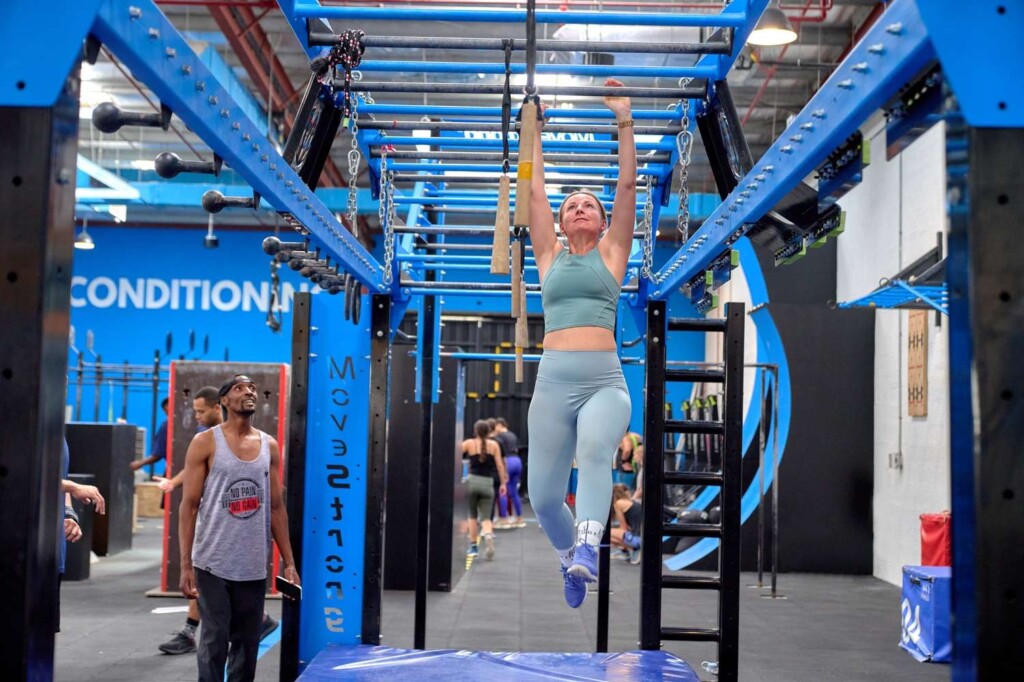
You can hit clean reps when fresh, but true skill shows when your heart rate spikes and fatigue sets in. That’s why your competition skills training should also consider developing rhythm, precision, and confidence even under fatigue.
Fresh Reps Vs Competition Reps
You can perform 20 pull-ups easily in a warm-up, but that doesn’t mean you’ll hit the same number after a sprint or row. Once your heart rate climbs, grip strength fades, and coordination slips. Recognizing this change helps you train smarter. Design your sessions to train for gymnastics under fatigue and test your physical ability and self-control.
Retain Your Skills Under Fatigue
The best way to reinforce skill retention is to place high-skill movements inside workouts that keep your heart rate high. Practice pull-ups after running or burpees after wall balls to mimic real event fatigue.
This approach, typically used in mental toughness training, conditions both your technique and mindset. Gradually increase exposure to discomfort so that maintaining quality reps becomes your second nature.
Develop Pacing and Breaking Strategies
Know when to push and when to pause. Plan your sets so you rest before your form breaks down. Use structured breathing to reset your rhythm, like steady exhale, relaxed shoulders, and smooth transitions between stations. The aim is control, not chaos.
Build Effective Team Training and Strategy
Teamwork defines your performance, and it needs to be a part of your Dubai Games prep. A strong team moves with rhythm, communicates clearly, and adapts fast.
Choose and Train with the Right Team
Structured team fitness training helps boost collective performance, and it starts with selecting the teammates who share goals and commitment levels. You need reliability more than raw ability.
In the competition, balanced teams, where strengths and weaknesses complement each other, tend to outperform others. You can plan separate sessions to refine personal weaknesses, but train together to practice transitions, pacing, and flow.
Communicate and Coordinate Efficiently
Effective communication is yet another factor that defines team performance. Use short, clear callouts such as “ready,” “tag,” or “go” to maintain flow and prevent confusion. Encourage each other with quick, clear phrases instead of long shouts. When using the waterfall format, practice tagging and positioning to minimize lost time.
Play to Strengths and Adapt on the Fly
Strong teams build their competition strategy around individual strengths. Organize workout order so each athlete contributes where they excel. For example, let your best runner open endurance rounds, while allowing your strongest lifter to anchor heavy sets.
Discuss your backup plans early, so if one of you gets tired or loses stamina, you can make replacements quickly. Being adaptable helps your team maintain the momentum, even when challenges arise.
Simulate Real Competition Conditions
Run full mock meets before event week. Record each session to review your transitions, movement flow, and workout pacing. Analyze where time is lost and where your rhythm improves. These simulations prepare you for real conditions and boost confidence in your shared rhythm.
Get Enough Nutrition for Training and Competition
Performance starts with what you eat. The right sports nutrition plan powers consistent progress, supports muscle recovery, and sustains energy during both training and competition.
Fuel Your Training Phases Effectively
Each training phase requires different nutrition. During the building phase, eat for growth and repair. Keep a steady intake of protein, quality carbohydrates, and healthy fats. Protein rebuilds muscle tissue, while carbs restore your energy after every session.
During the taper phase, slightly lower your total calories as training volume decreases, but continue eating nutrient-dense meals. This keeps your energy levels stable without adding unwanted bodyweight.
Most functional fitness athletes use a competition nutrition plan of about 40% carbohydrates, 30% protein, and 30% fats. You can adjust these ratios based on how your body responds and how well you recover between sessions.
Time Your Daily Nutrition
Timing your meals helps your body perform. Eat your main pre-workout meal about 2 – 3 hours before training. Use a combination like lean protein, rice, and vegetables. Then, have a small snack 30 – 60 minutes before your session, such as a banana or yogurt.
- For morning training, go for light, easily digestible options.
- For evening sessions, include complex carbs at lunch to support your late workout.
The recovery nutrition window is usually within 30 minutes after training. You can combine protein and carbohydrates, such as a shake and a banana, to reduce soreness, rebuild muscle, and restore energy.
Prepare a Competition Day Nutrition Plan
On competition day, keep your food choices simple and familiar. The night before, eat a balanced meal of lean meat, rice, and cooked vegetables.
In the morning, have breakfast about 2 – 3 hours before your first event. Oats, eggs, or rice pudding provide stable energy without digestive stress. Between events, choose quick-digesting carbs like fruit, dates, or energy gels. Hydrate consistently with electrolyte drinks.
Avoid heavy or greasy meals and skip new foods that could upset your stomach. A well-planned competition nutrition helps you and your team maintain focus and steady energy through every round.
Create A Hydration Strategy for Dubai’s Climate
Your hydration strategy is as important as your diet. Drink 35 – 45 ml of fluids per kilogram of body weight each day during training. In Dubai’s heat, water alone isn’t enough. Use electrolyte drinks to replace lost sodium, potassium, and magnesium from sweat.
On competition days, sip fluids early and continue drinking between events. Watch for dehydration signs such as dizziness, dry mouth, or reduced concentration. Address them quickly to prevent a drop in performance.
Use Supplements That Support You
Supplements should help your plan, not define it. Protein powder helps when real food isn’t convenient. Creatine supports short bursts of high-intensity effort, and caffeine taken 45 – 60 minutes before competing can sharpen your focus. That said, avoid using products promising instant results or unrealistic “fat-burning” claims.
Coach Insight: What we recommend is keeping your nutrition plan simple, like chicken and rice before events, dates, and electrolytes between rounds, and high fluid intake all day. It’s a simple but effective strategy that maintains your energy without any digestive issues, even under Dubai’s extreme heat.
Follow Recovery Protocols That Actually Work
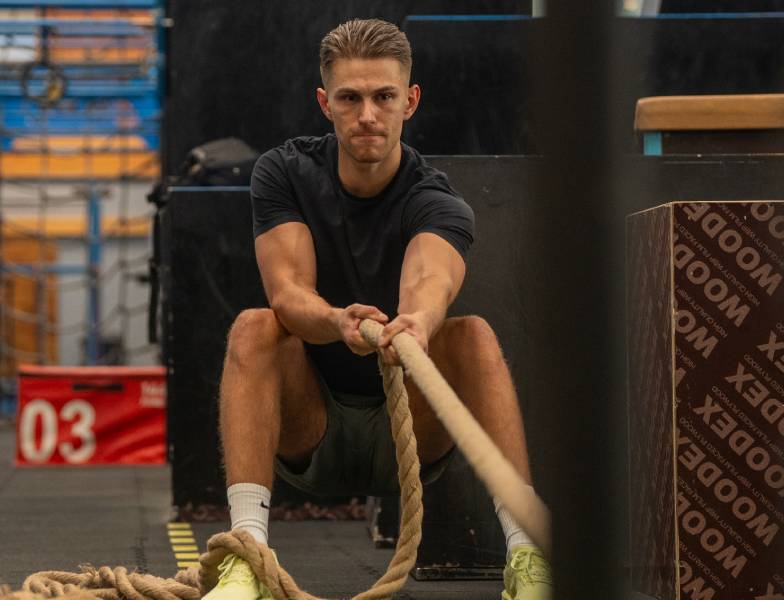
Recovery completes your training cycle. Without it, even the best training strategies fail to deliver. However, your athletic recovery needs to be structured.
Protect Sleep as Your Strongest Recovery Tool
No one can dispute the importance of sleep for athletes. It’s how your body repairs, balances hormones, and restores mental focus during rest. Aim for seven to nine hours of continuous sleep in a dark, cool, and quiet room, which is a must in Dubai’s warm nights.
Inconsistent or poor sleep slows your progress and increases injury risk. Treat your sleep routine like fitness training. Schedule it, protect it, and monitor its quality.
Use Active Recovery on Light Days
Full rest is useful when soreness or fatigue interferes with your performance. But you should use active recovery methods on lighter days. Light movements such as walking, swimming, or yoga improve blood circulation and accelerate muscle repair.
Gravity DXB’s flexibility classes are designed for exactly this purpose. They promote range of motion, relax the nervous system, and help your team stay mobile across a long training week.
Maintain Mobility and Tissue Health
Regular mobility work keeps your joints functional and reduces stiffness. Foam roll briefly before workouts, then use slow stretching afterward to restore motion. Focus on hips, shoulders, and spine for long-term resilience. Just ten minutes daily can prevent problems that may derail your training for weeks.
Focus on Proven Recovery Techniques
Use proven recovery techniques, like cold plunge therapy, which aids inflammation control, while contrast or heat therapy supports relaxation. You can also use compression tools and massage to assist circulation, but they remain secondary. Instead, focus on what works: consistent sleep, proper hydration, and balanced nutrition.
Listen to Your Body’s Signals
Pay attention to your energy levels, heart rate, and focus. These cues reveal whether you’re ready to train or need rest. Self-awareness is your best tool for injury prevention. Track how you feel each morning to decide whether to push or adjust volume. Recovery reflects discipline as much as competition training does.
Coach Insight: Most of you train hard while balancing work and family. If you’re training five to six days a week, recovery has to be practical, like seven hours of sleep minimum, one full rest day, and a light mobility session midweek. Balance your efforts and rest to stay consistent, especially with a demanding job and a family.
Don’t Ignore Injury Prevention Training
Staying healthy keeps your progress steady, which is where injury prevention training plays a key role. It helps you and your team to train consistently and without setbacks.
Identify and Address Common Injuries in Functional Fitness
Functional fitness improves strength and endurance, but can also stress your joints. Typically, shoulders react to high-volume pulling or unstable overhead work, while lower backs respond to poor lifting mechanics.
Likewise, your wrists tighten after repeated gymnastics drills, and your knees absorb heavy impact from frequent jumping and running. Spotting these signs early helps in overuse injury prevention.
Warm Up the Right Way to Stay Injury-Free
A proper warm-up activates your muscles and joints. Focus on dynamic movements instead of static stretching. Perform band pull-aparts, hip openers, and controlled squats to engage target areas. Increase your intensity gradually in the first ten minutes. This simple step prevents fatigue-related errors and helps you train longer with fewer interruptions.
Use Prehab Exercises to Strengthen Weak Links
Prehab exercises protect your body by building small stabilizing muscles. You can strengthen your rotator cuffs, improve wrist durability for pressing and handstands, and stabilize your core with anti-rotation drills. Add single-leg balance work to your routine to improve joint control. This is smart training, which means working on the structures that make high performance safe.
Respond Quickly to Warning Signs of Injury
Pain is your body’s feedback, but you must learn to differentiate discomfort from actual pain. If your form changes or recovery slows, adjust the session or rest briefly. Get professional help before discomfort turns into pain. Prevention is always better than rehab.
Set Your Competition Mindset
Physical ability builds your foundation, but your mindset defines your outcome. Mental toughness training helps you and your team perform under pressure, make confident decisions, and recover quickly from setbacks.
Build a Solid Mental Game During Training
Every training session defines your competition psychology. Train with intent, not habit, even when fatigue sets in. Push through controlled discomfort to build tolerance. The confidence you feel on game day grows from weeks of discipline, not from last-minute hype. When you’re mentally strong, you stay calm and focused while others fade under pressure.
Use Visualization to Strengthen Focus
Visualization bridges your mind and movement. Picture each phase of your performance, including transitions, timing, and communication. Visualize yourself breathing evenly and moving with precision. Walk through the competition in your head before stepping out in the arena: hear the sounds, see the layout, and feel your rhythm. This mental rehearsal helps you reinforce a performance mindset long before game day.
Manage Your Pre-Competition Nerves
Feeling anxious is normal; it means you are ready to perform. Turn your anxiety into action by reframing it as energy. Use deep, slow breaths to stabilize your body, inhale for four seconds, and exhale for six.
Additionally, build a simple pre-competition routine: check your gear, warm up with intent, and share a final cue with your teammates. It helps you focus and calms your pre-competition nerves. Enter the arena with a calm, focused mind so your team reacts faster, adapts better, and finishes stronger.
Chalk Out Your Competition Week Strategy
The final week before the competition is about maintaining control, not pushing your limits, which you can achieve with a competition week strategy.
Training with a Smart Competition Taper
In the final week, reduce your training load without losing sharpness. Use a competition taper that cuts total volume by 40 – 60% while keeping intensity consistent. Use short “touch and go” sessions to rehearse movements under low fatigue.
Here’s what the tapering looks like:
- Day 7 – 5: Short skill sessions
- Day 4 – 3: Light conditioning that reinforces precision
- Day 2: Active recovery and mobility
- Day 1: Full rest with strategy review
Have Your Logistics Checklist Ready
Before the event, create a pre-competition checklist that covers every detail. Pack all your gear, including shoes, grips, tape, and uniforms. Include snacks, hydration, and ID as well. Double-check your travel, accommodations, and meeting points. Confirm your team schedules and communication plans early.
Avoid Last-Minute Mistakes
Mistakes happen when training, but you need to avoid doing a few things. For starters, do not test new workouts, diets, or equipment. Skip hard “make-up” sessions. The final week is to keep you fresh, not make fitness gains. Trust the preparation you’ve already been through. Arrive at the event calm, rested, and ready for your peak performance.
Stick to Your Competition Day Game Plan
It’s best to stick to your competition day routine to perform with control and confidence. This routine chalks out your every movement, timing, and communication. So, do this:
Start Right with a Morning Routine
Wake up early to eat, move, and focus. Eat a balanced breakfast of protein, slow-digesting carbs, and fluids two to three hours before the first event. Arrive at the venue one hour early to check in, warm up, and review your game plan. Use this quiet time to stay calm and centered.
Warm Up for Your First Event
Start with a general warm-up, like light jogs, mobility, or dynamic stretching. Then, move into specific drills matching your first event. Practice transitions, grips, or barbell timing. Gradually raise intensity to reach working pace. Follow your warm-up protocol as a team to stay synchronized ahead of the competition.
Reset Smartly Between Events
After each workout, walk or stretch lightly for circulation. Rehydrate quickly and eat simple carbs like fruit or dates. Reflect briefly, then reset your focus. The more effective your between-event recovery is, the more consistent your performance will be across rounds.
Execute with Calm
It’s easy to get carried away with excitement, but stick to your game plan. Stay steady, manage your breathing, and prioritize rhythm through rounds. Taking one step at a time with a steady mind leads to a controlled performance execution.
Finish Strong with Proper Cool-Down
Even if you feel exhausted, end your day with five to ten minutes of light movement. Stretch major muscle groups and rehydrate fully. Remember, only a proper cool-down helps you recover.
End with Post-Competition Recovery and Reflection
Preparing a post-competition recovery plan is as important as your training. It helps you and your team rebuild strength, restore energy, and prepare for the next challenge.
Start Recovery with Gentle Movement
Begin your recovery with light activity such as cycling, swimming, or walking. These movements improve blood circulation and reduce stiffness. Eat nutrient-dense meals rich in protein and stay hydrated. Give sleep priority, as rest drives repair more effectively than supplements or stretching routines.
Use a Deload Week for Active Recovery
Spend the following week lowering both intensity and training volume. Treat it as active recovery time, allowing your body and mind to reset. Avoid rushing into heavy training. This break helps you prevent injuries and supports full restoration.
Conduct Honest Performance Analysis
Regardless of the outcome, review the competition with honesty. Identify what worked well, what failed, and what you would adjust next time. Performance analysis is critical for your growth as an athlete and a team member. And yes, don’t forget to celebrate the work you and your team put in, whatever the result was.
Plan Your Future Training
Start your training with defined goals based on what you’ve learned. Use insights to refine both your physical training and mindset. Discuss upcoming events with your team and treat each one as a step closer to continuous development.
How Gravity Supports Your Competition Journey
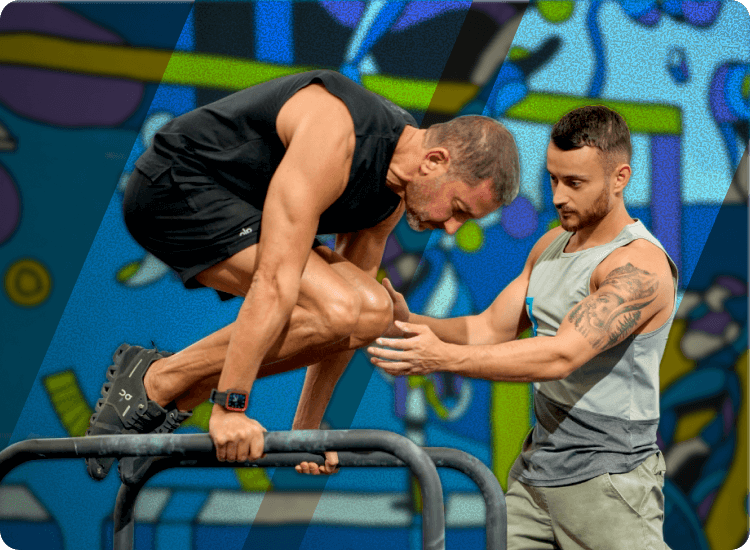
If you’re training at Gravity Calisthenics Gym in Dubai, your competition goals take center stage. Whether you’re a first-timer or a seasoned competitor, we provide you with structured competition training that builds strength, skill, and confidence for you and your team.
Build Strength with Competition-Ready Training Programs
Train with focus through our specialized sessions designed for peak performance:
- Calisthenics classes help you improve control and precision with progressive training programs.
- Hyrox training is perfect for building endurance, especially for multi-event challenges, through functional conditioning.
- Strength and conditioning training develops a balance of power, mobility, and coordination for complete readiness.
- OCR lessons sharpen your agility and obstacle-handling skills by improving strength, endurance, and mental grit.
Each class at Gravity Calisthenics Gym prepares both your body and mind for competition-level performance.
Train with Personalized Support
Our expert coaches can provide you with a customized training plan depending on your skills, stamina, and goals. This personalized support is focused on maintaining progress and preventing fatigue while keeping energy aligned with your competitive targets. Your team benefits from structured guidance that refines performance without overtraining.
Begin Your Preparation with Confidence
Start your journey by assessing your fitness level through a free consultation. Join a trial session, explore your options, and select a program that fits your competition timeline. At Gravity Calisthenics Gym in Dubai, your determination meets expert structure, helping you build readiness one session at a time.
Conclusion: Start Your Competition Journey Now
Training smart, recovering right, and performing strongly are the three foundations of lasting progress. Each phase prepares you not only for the Dubai Games 2026 but for lifelong fitness.
However, this preparation takes months, not weeks. Every workout brings you closer to stepping onto the floor ready, confident, and capable in February 2026. The reward is knowing you trained fully and performed at your best. That mindset stays with you beyond the competition.
Join Gravity DXB and its training community, connect with expert coaches, and begin your competition journey today.
Book your free trial class and start training with purpose.