
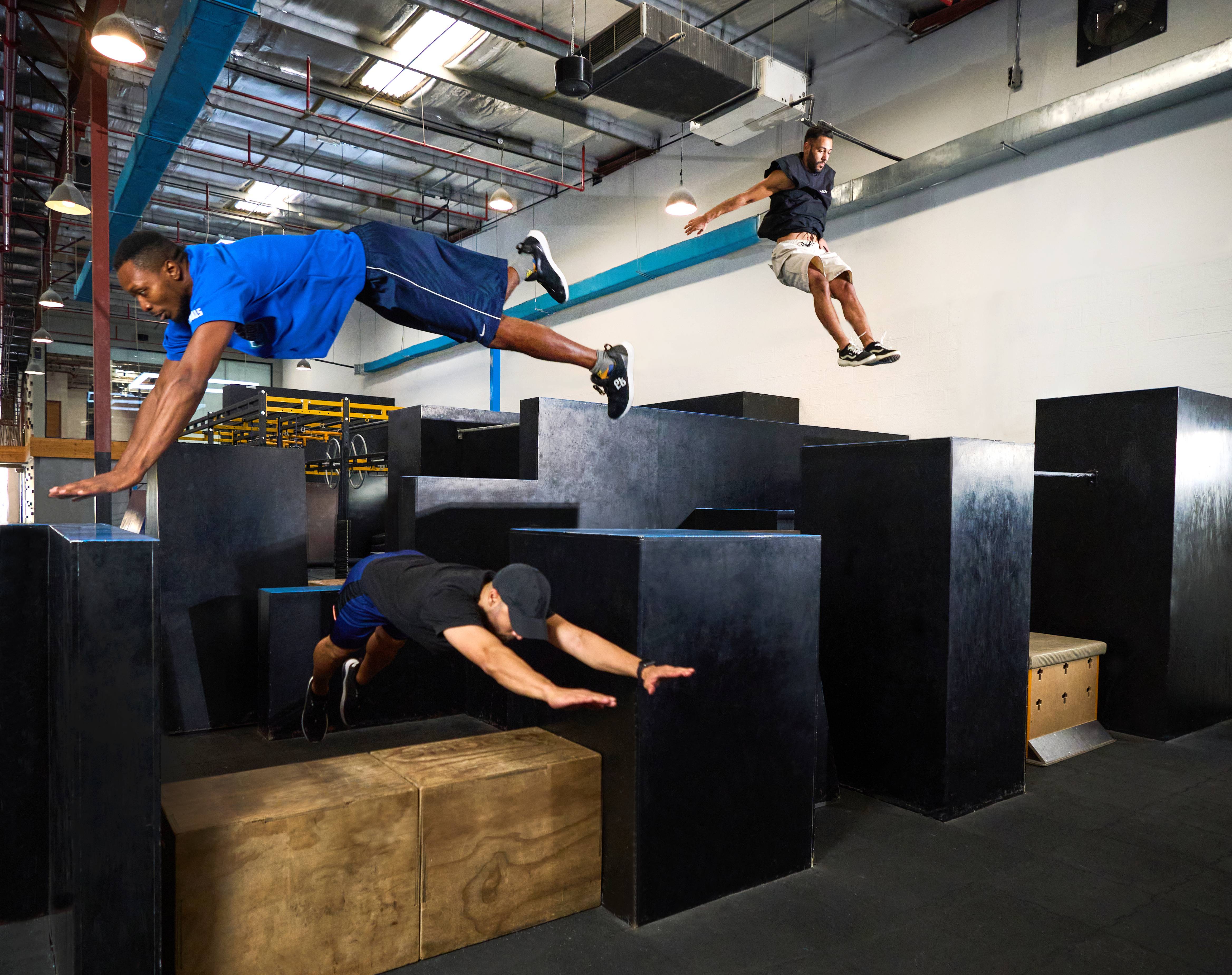
Most people who walk into a traditional gym know exactly what they’re getting: fixed machines, isolated movements, and a workout that rarely translates into how your body actually needs to move in the real world. Parkour and calisthenics training flips that model completely. These disciplines build strength through movement, not in spite of it, and the results go far beyond what you’d measure on a scale or in a mirror.
At Gravity Calisthenics Gym, we’ve been coaching athletes and beginners through these disciplines since 2015. What we see every day on the gym floor confirms what progressive coaches worldwide have known for years: when training respects how the body is designed to move, everything improves. Strength, coordination, confidence, injury resilience. All of it.
Physical Benefits That Go Beyond the Surface
Building Real, Functional Strength
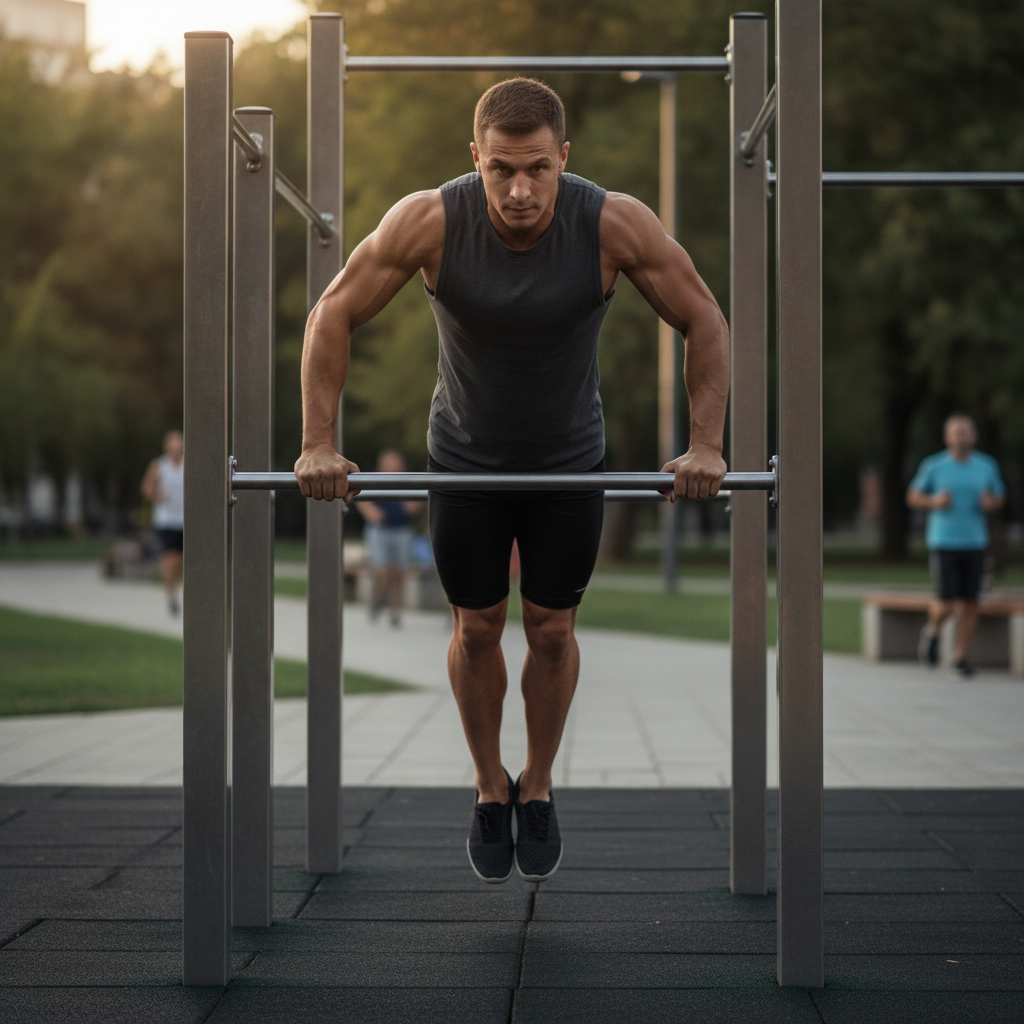
Calisthenics training develops strength by working multiple muscle groups simultaneously through compound bodyweight movements. Pull-ups, dips, push-up progressions, and handstand work don’t just build muscle, they develop the neuromuscular coordination that makes you capable, not just strong-looking.
Parkour adds another layer. Precision jumps, vaults, and balance work demand that your strength be *transferable*. You can’t rely on a machine to stabilise you. Your joints, tendons, and stabilising muscles adapt in ways that isolated training simply can’t replicate. This is what functional fitness training experts point to as the core value of movement-based exercise: training the body as an integrated system, not a collection of parts.
Mobility, Flexibility, and Injury Resilience
One of the most underrated movement benefits of combining parkour and calisthenics is how they improve joint health over time. The range of motion required for deep squat holds, cat-leap landings, and skin-the-cat progressions keeps connective tissue supple and responsive.
Research published in peer-reviewed literature on bodyweight resistance training and musculoskeletal health supports what we see practically: progressive bodyweight exercise improves both strength and mobility simultaneously, reducing the compensatory movement patterns that lead to chronic injury in conventional gym goers.
Our coaches pay close attention to this. Smart progressions protect you. Rushing them is how injuries happen, and we’ve written in detail about how to avoid that in our guide to common parkour injuries and prevention.
Cardiovascular Conditioning Without a Treadmill
Both disciplines deliver serious cardio conditioning. Parkour sessions especially, where you’re running, jumping, and vaulting in sequence, will challenge your aerobic and anaerobic systems in the same workout. Calisthenics circuits, when programmed correctly, keep heart rate elevated while building strength. The body adapts fast.
| Training Type | Primary Physical Benefit | Secondary Benefit |
|---|---|---|
| Calisthenics | Relative strength and muscle control | Joint stability and posture |
| Parkour | Explosive power and spatial awareness | Cardiovascular conditioning |
| Combined Training | Full-body functional capability | Injury resilience and longevity |
Your Body Can Do More Than You Think.
Mental and Cognitive Health Advantages
The Problem-Solving Component
Parkour is often described as physical chess. Every environment presents a puzzle: how do I move from A to B efficiently, safely, and with control? This constant spatial problem-solving activates cognitive functions that traditional gym training rarely touches. Over time, practitioners develop sharper spatial awareness, faster reaction times, and a calmer relationship with perceived risk.
Calisthenics delivers its own mental challenge through skill acquisition. Learning a muscle-up or a handstand isn’t just physical. It requires focused practice, body awareness, and the patience to work through a structured progression. These are disciplines that build mental resilience alongside physical capability.
Confidence Built Through Real Achievement
There’s a specific kind of confidence that comes from mastering a movement skill. It’s not the same as hitting a new deadlift number (though that’s satisfying too). When a member at Gravity lands their first precision jump or completes their first clean bar muscle-up, something shifts. They understand their body differently. That confidence carries into daily life in ways that are hard to quantify but impossible to ignore.
The health advantages of movement training extend into mental wellbeing, stress reduction, and social connection. The global fitness industry continues to grow, with fitness participation tracking showing consistent increases in demand for functional and movement-based training formats worldwide. People are looking for training that *means* something, and these disciplines deliver exactly that.
Community, Progression, and Long-Term Results
Training That Scales With You
One of the most common concerns we hear: “I’m not fit enough for parkour or calisthenics.” It’s worth addressing directly. These disciplines are built on progressions. Every advanced movement has a beginner entry point. A precision jump starts as a standing step-off. A muscle-up starts as a negative pull-up. The programming is the point.
- Beginners develop foundational strength, coordination, and body awareness
- Intermediate athletes build skill complexity and increase training volume
- Advanced practitioners work toward performance goals and competitive preparation
- Kids benefit from coordination development and healthy movement habits from a young age
This progression model is exactly what we apply across all our classes at Gravity. Whether you’re working toward your first pull-up or preparing for an OCR event, the structure supports you.
When It’s Not the Right Fit (And What to Do)
Honest coaching means acknowledging limitations. If you’re recovering from a significant lower limb injury, the impact demands of parkour require careful management and medical clearance. If your primary goal is maximal hypertrophy or powerlifting, calisthenics alone may not provide sufficient loading stimulus without additional programming. And if you’re someone who trains best in complete isolation, the community-focused environment of a movement gym may feel unfamiliar at first.
That said, these aren’t reasons to avoid these disciplines. They’re reasons to start with the right guidance. Our coaches assess where you are and build a path that’s honest about your starting point.
Cross-Training and Multi-Discipline Benefits
The parkour calisthenics benefits compound when combined with complementary training. Many of our members pair their movement work with Hyrox preparation, which demands both the functional strength calisthenics develops and the conditioning that parkour training sharpens. If you’re curious about how structured competition training integrates with movement disciplines, our Hyrox training guide breaks that down in detail.
We also run regular events and workshops that bring together athletes across disciplines, because cross-training isn’t just physical. It’s about expanding your perspective on what your body can do.
Looking ahead, the trajectory of functional movement training is clear. As more gyms globally move away from machine-based isolation training toward integrated movement programming, parkour and calisthenics will only grow in relevance. Wearable technology and movement analysis tools are beginning to quantify what coaches have observed for years: movement quality predicts long-term athletic longevity better than raw strength metrics alone. Training intelligently now builds a foundation that pays off for decades.
Still Thinking About It? Just Book It.
Conclusion
The case for parkour and calisthenics training isn’t built on trend-chasing. It’s built on how the human body actually works. These disciplines develop strength that transfers, mobility that protects, mental resilience that compounds, and a relationship with movement that most traditional fitness approaches simply can’t offer.
At Gravity, we’ve watched hundreds of members discover what their bodies are genuinely capable of through intelligent, progression-based training. That transformation is available to anyone willing to start, regardless of current fitness level. If you’re ready to experience this for yourself, get in touch with our team and take the first step.
Frequently Asked Questions
Can I start parkour and calisthenics training if I have no athletic background?
Yes, absolutely. Both disciplines are structured around progressions that begin at foundational movement levels. At Gravity, we regularly onboard complete beginners with no prior training. Most members see measurable improvement in strength and coordination within the first 6 to 8 weeks of consistent training.
How does training in both parkour and calisthenics compare to going to a standard weights gym?
Weights gyms excel at building maximal strength and muscle mass through loading. Parkour and calisthenics training prioritises relative strength, coordination, spatial awareness, and movement quality. The two approaches aren’t mutually exclusive, but movement training delivers functional health advantages that isolated weight training typically doesn’t replicate.
How many sessions per week do I need to see real progress in these disciplines?
Three sessions per week is a reliable starting point for consistent progress. This gives enough training stimulus while allowing adequate recovery, which matters especially in the early stages when your connective tissue is adapting alongside your muscles. Many members train four or five times weekly once they’re established.