
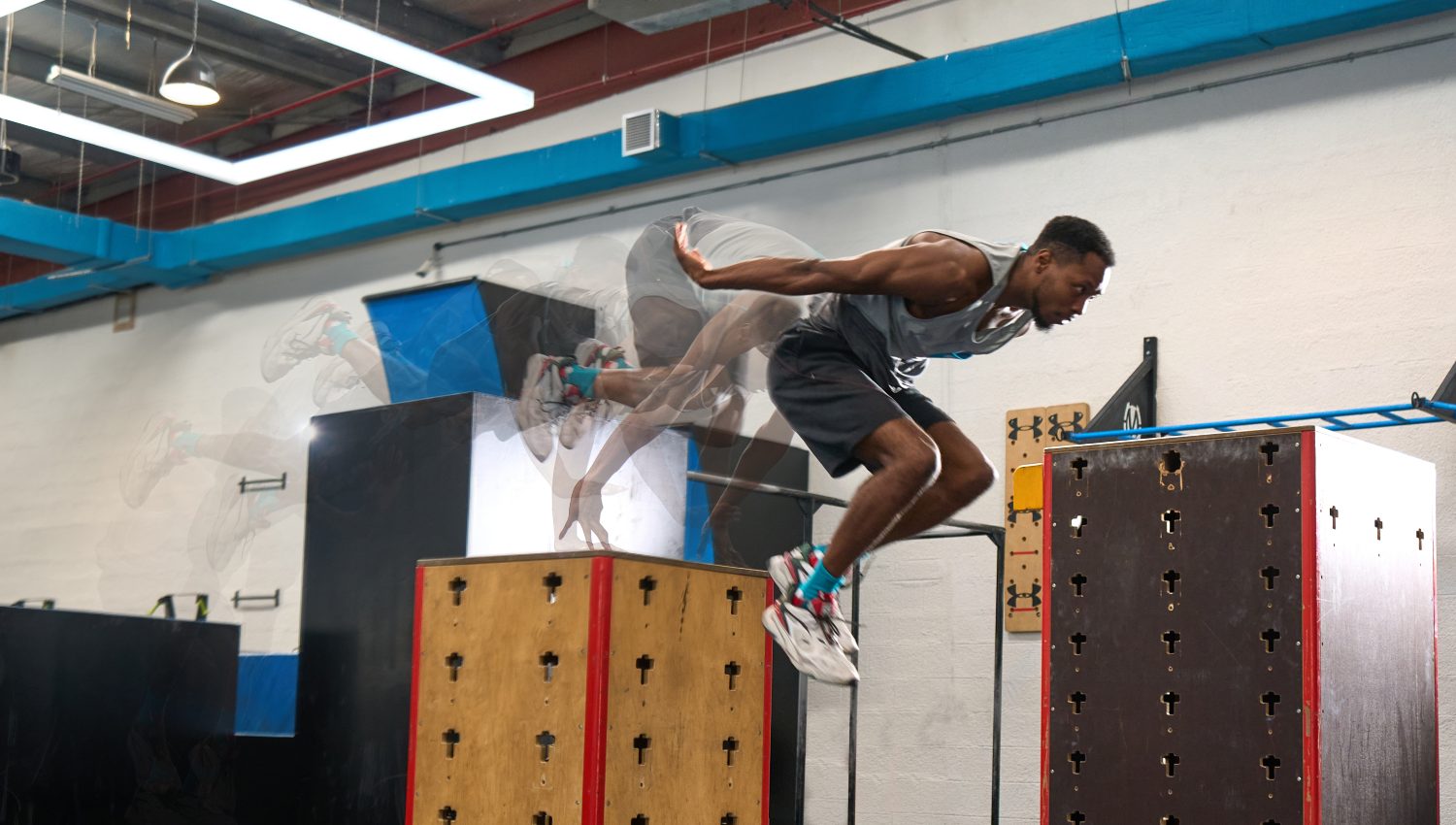
Most parents who walk through our doors have the same look on their face: a mix of excitement and quiet anxiety. Their child has been bouncing off furniture at home, watching parkour videos, and begging to try it for real. The parent is curious, maybe a little nervous, and wondering whether this is actually safe for a kid. We get it. And the honest answer is yes, structured parkour training in a proper gym environment is not only safe, it’s one of the most developmentally rich activities your child can do.
At Gravity Calisthenics Gym, we’ve been building young movers since 2015. What we’ve seen repeatedly is that kids who train parkour develop spatial awareness, problem-solving, physical confidence, and a genuine love of movement that carries into adulthood. But getting started the right way matters. Here’s how to do it.
Why Parkour Is One of the Best Activities for Kids
Before we get into the enrollment process, it helps to understand what parkour actually does for a child’s development. This isn’t just jumping and climbing. Parkour teaches children how to assess their environment, calculate risk, manage fear, and move efficiently through space. Those are real-world skills wrapped inside something that feels like play.
Physical Benefits That Go Beyond Sport
Research published in peer-reviewed journals on children’s physical activity and motor development consistently highlights the value of varied, multi-plane movement for growing bodies. Parkour delivers exactly that. Unlike single-sport training, parkour trains the whole body through running, jumping, landing, balancing, climbing, and vaulting. Children develop:
- Coordination and balance through constant proprioceptive challenges
- Strength relative to bodyweight, a foundation for all athletic development
- Spatial awareness that transfers to every other sport and activity
- Safe landing mechanics that actually reduce injury risk in everyday life
- Mental focus from learning to assess obstacles methodically
The functional fitness principles that underpin professional coaching frameworks are naturally embedded in parkour. Children aren’t just getting fit, they’re learning how to use their bodies intelligently.
The Confidence Factor
This one doesn’t show up in data, but we see it every week on the gym floor. A child who couldn’t do a single precision jump in week one is landing it cleanly by week four. That progression is visible and felt. Kids *know* they’ve improved, and that builds a relationship with challenge and effort that a trophy never could.
Your Body Can Do More Than You Think.
Understanding the Enrollment Process and What to Expect
Getting your child into a first class doesn’t need to be complicated, but knowing what to look for makes the whole experience smoother for both of you.
Choosing the Right Gym
Not every gym that offers parkour has coaches trained to work with children specifically. When evaluating options, ask these questions directly:
- Do coaches have experience with kids, not just adult athletes?
- Are classes grouped by age and ability?
- What’s the coach-to-student ratio?
- Is there a structured progression system, or is it freestyle sessions?
- What safety equipment and padding does the facility use?
At Gravity, our kids’ classes are designed with age-appropriate progressions. We don’t throw beginners into advanced movement. Every child starts with fundamentals, and advancement is earned through demonstrated ability and comfort, not age alone.
What the First Class Actually Looks Like
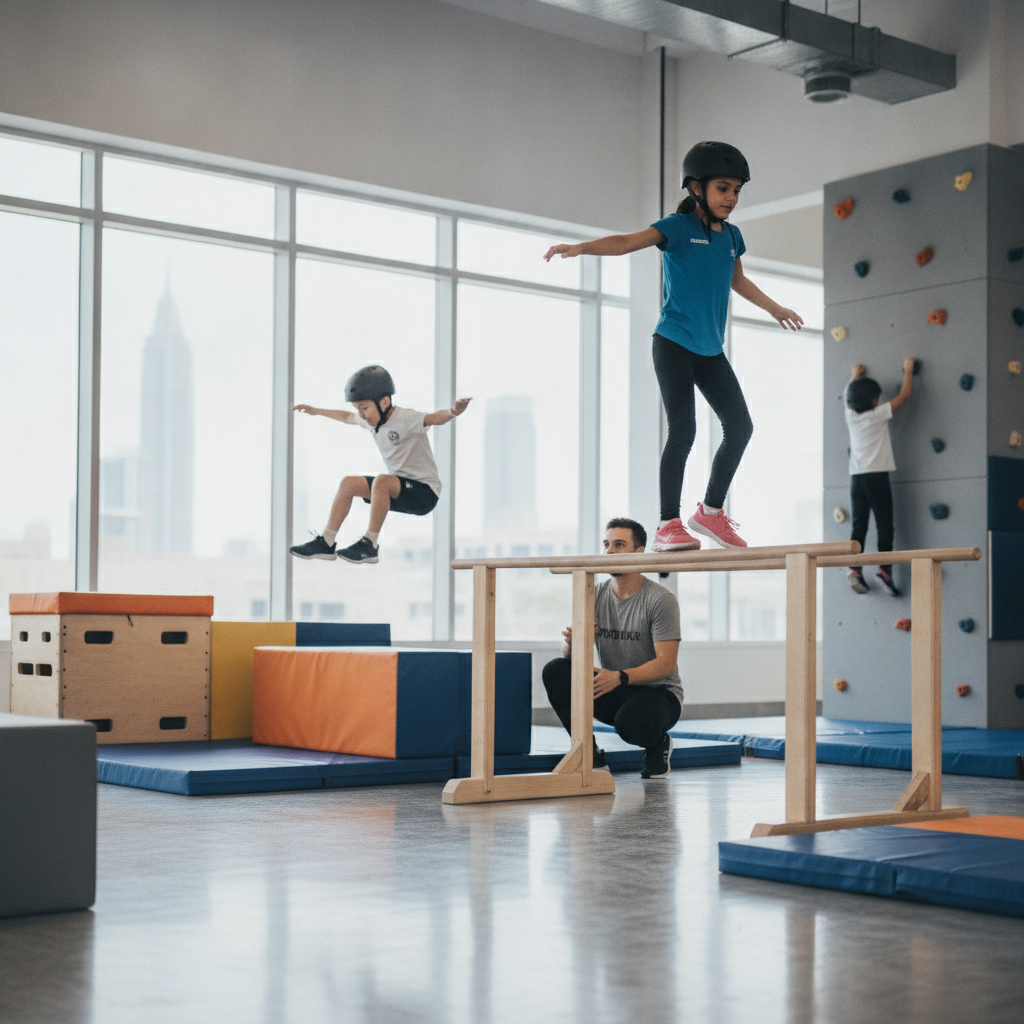
The first session is about exploration and assessment, not performance. A good beginner class will include a warm-up focused on mobility and body awareness, introduction to fundamental movements like safe landings and basic jumps, and structured play that builds confidence on equipment without pressure to perform.
Our coaches observe how each child moves naturally, where they’re hesitant, and where they show instinctive ability. That shapes their individual progression from day one. You can book a trial class to let your child experience the environment before committing to a full program.
What to Bring and Wear
| Item | Recommendation | Why It Matters |
|---|---|---|
| Footwear | Thin-soled, grippy trainers (no thick soles) | Better ground feel and landing feedback |
| Clothing | Fitted but flexible (no baggy shorts) | Avoids snagging on equipment |
| Hydration | Water bottle, at least 500ml | Dubai heat means kids need to stay hydrated |
| Attitude | Openness to try, willingness to fail safely | Progression mindset is the most important gear |
Addressing the Real Concerns Parents Have
We’d be doing you a disservice if we skipped the honest conversation. Parkour *looks* risky. When you watch skilled practitioners online, you’re seeing years of progressive training compressed into a highlight reel. What kids learn in a structured gym environment is the complete opposite of that: methodical, coached, and built on repetition of safe fundamentals before anything more advanced is introduced.
The Safety Conversation
Injuries happen in every sport. The question is whether the training environment manages risk intelligently. Our approach to parkour injury prevention is built into every session: proper warm-up, coached technique, age-appropriate progressions, and a culture where saying “I’m not ready for that yet” is encouraged, not judged.
Children in parkour classes also develop better fall mechanics than kids who don’t train movement at all. The ability to roll out of a fall, absorb impact correctly, and read terrain safely has genuine real-world protective value.
A Balanced View
Parkour isn’t the right fit for every child at every stage. A very young child (under 5) may not yet have the attention span for structured coaching. A child with certain physical considerations may need medical clearance first. And some kids simply aren’t drawn to movement-based training, and that’s completely fine. The goal is never to push a child into something, it’s to create an environment where the right children can genuinely thrive.
For those who do connect with it, the results extend far beyond fitness. As the global fitness community continues to grow (with fitness participation increasing across age groups globally), movement literacy is becoming a genuine life skill. Parkour builds that literacy from the ground up.
What About Kids Who Are Already Active in Other Sports?
Parkour complements almost every other sport remarkably well. Footballers develop better body control. Swimmers improve spatial awareness. Gymnasts find new ways to apply strength they’ve already built. We also offer specialist workshops and events that work well for kids wanting to dip in alongside their main sport without committing to a full program.
The foundational movement principles we teach overlap heavily across disciplines. Children who cross-train in parkour often report improvements in their primary sport within weeks.
Taking the First Step
Starting parkour for kids in Dubai doesn’t require your child to be exceptionally athletic, fearless, or experienced. It requires curiosity and a good coach. The first class is always the hardest step, mostly for the parents. The kids usually sprint in and never look back.
If you’re ready to explore what’s possible for your child, get in touch with our team. We’ll walk you through the right class, the right age group, and the right starting point for where your child is today, not where they need to be. Movement has a way of taking care of the rest.
Looking ahead, we expect youth movement programs to become a core part of how Dubai families approach long-term health and physical education. As screen time increases globally, the demand for training that combines physical challenge with genuine fun will only grow. Parkour, done right, sits at the perfect intersection of both.
Commit to the Coolest Version of Yourself.
Frequently Asked Questions
What age can my child start parkour classes at a gym?
Most structured parkour programs accept children from age 5 or 6 onwards, when coordination and attention span are developed enough for coached sessions. At Gravity, our youngest kids’ classes begin at age 5, with curriculum specifically designed for that developmental stage rather than scaled-down adult training.
How many classes per week does a beginner child need to see real progress?
One session per week is enough to build meaningful skill in the first three months. Children who attend twice weekly typically show noticeably faster progression in landing mechanics and confidence. Consistency matters far more than volume at the beginner stage.
Do I need to buy special equipment before my child’s first parkour class?
No specialist equipment is required before the first class. Thin-soled trainers with good grip are the only real essential. The gym provides all obstacles, padding, and training tools. Save any gear investment until after a few sessions, once you know your child is genuinely committed.