
Every parent eventually faces the same question: which sport is actually best for my child? Football, swimming, gymnastics, martial arts, the list is long. But over the past decade, parkour has moved from underground urban movement culture into mainstream kids’ fitness programs, and for good reason. When you put parkour vs other sports under a proper lens, the development benefits are genuinely compelling. Not just physically, but mentally and socially too.
At Gravity Calisthenics Gym, we’ve been coaching kids through movement since 2015. We see firsthand how children respond differently to parkour compared to traditional team sports or structured gym classes. Here’s an honest breakdown of what sets it apart.
What Parkour Actually Develops in Kids
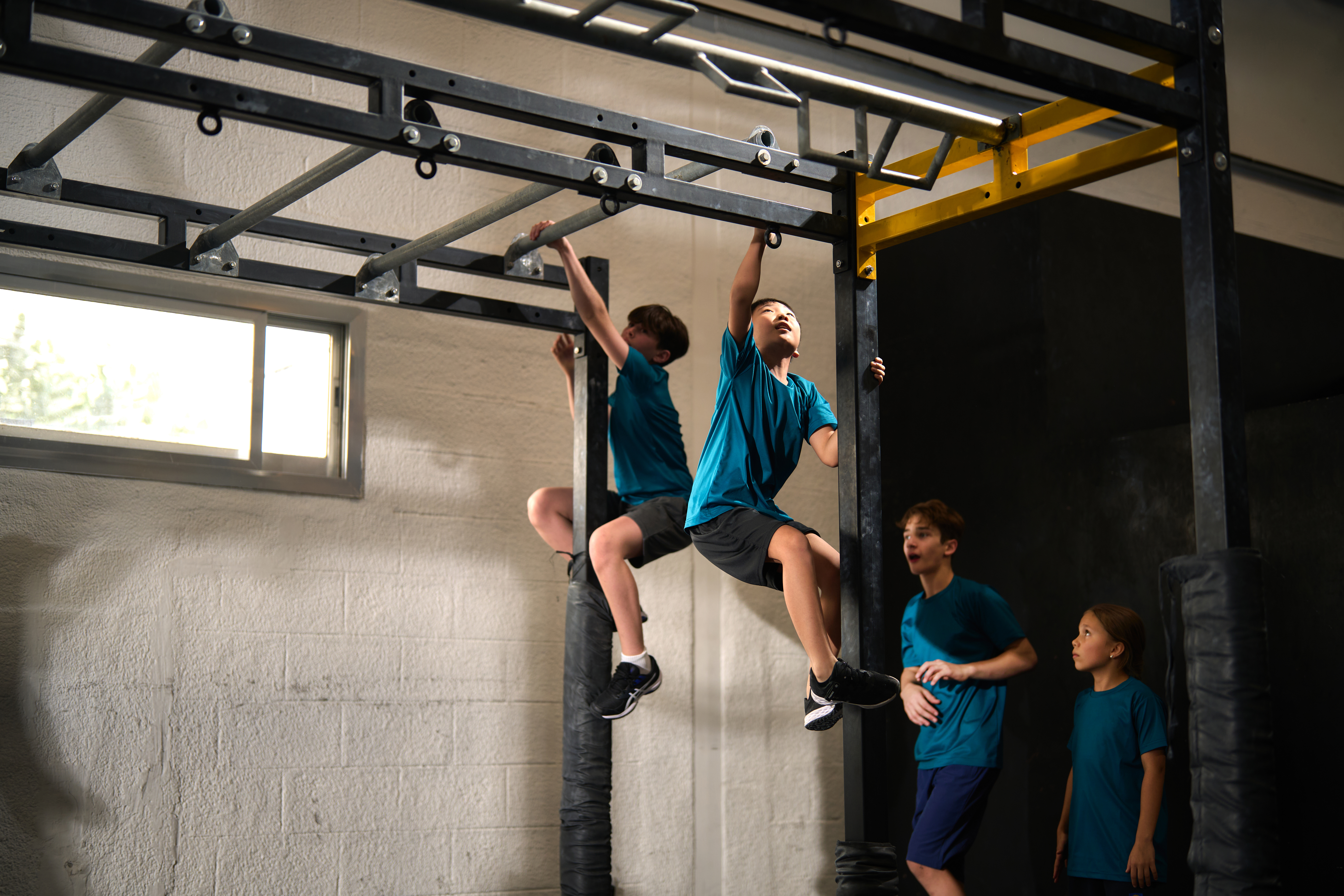
Parkour is often misunderstood as “jumping off buildings.” In a proper coaching environment, it’s something far more deliberate. It’s the practice of moving efficiently and confidently through your environment, vaulting, balancing, jumping, climbing, and landing with control. Every single movement demands full-body coordination, spatial awareness, and real-time problem solving.
Physical Development: More Than Just Strength
Most kids’ sports develop specific physical qualities. Swimmers build cardiovascular endurance and upper body strength. Football players develop speed and lateral agility. Both are valuable. But parkour sits in a unique position because it trains almost every physical quality simultaneously.
A child in a parkour class will practice:
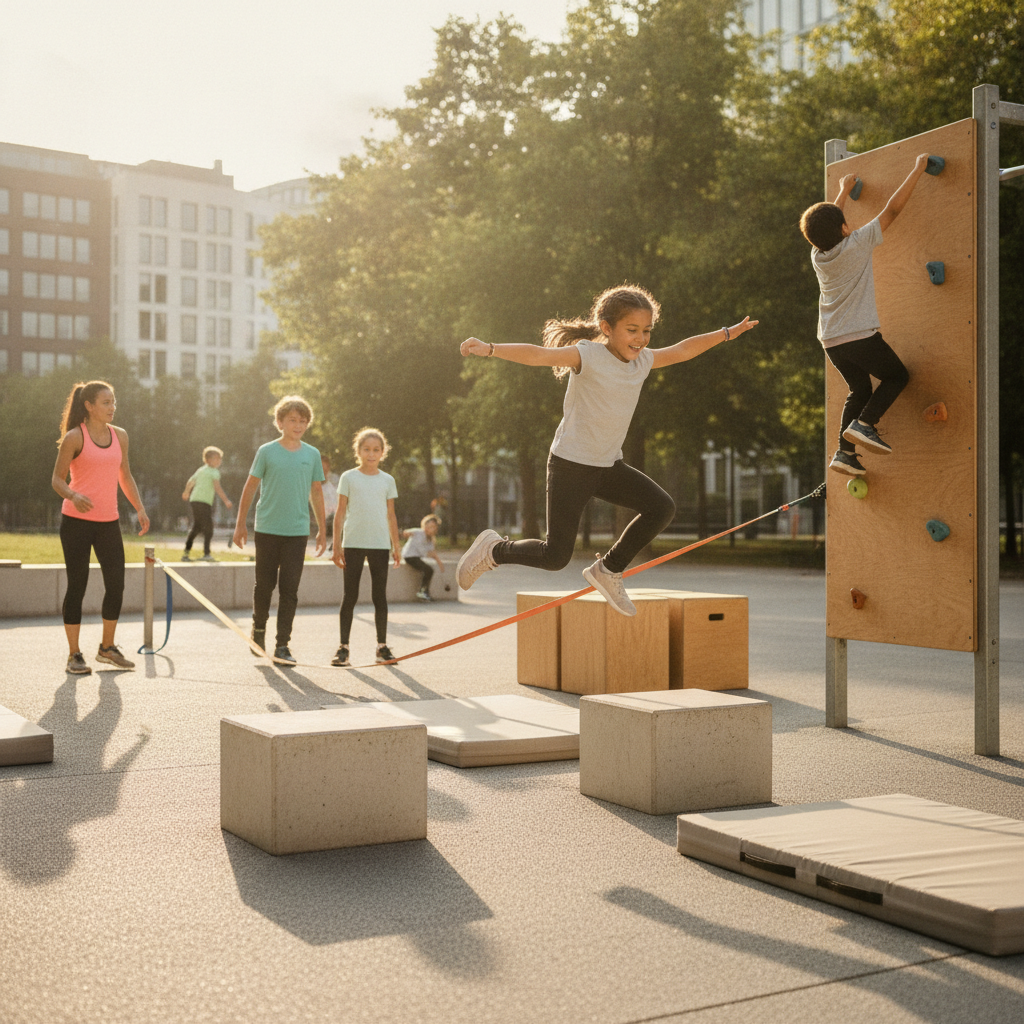
- Balance and proprioception through beam work and precision jumps
- Explosive power through jump training and vaulting
- Upper body pulling strength through climbing and cat hangs
- Core stability through almost every movement pattern
- Landing mechanics that train joint integrity and injury prevention
This kind of functional movement training mirrors what ACE Fitness describes as training the body for real-world movement demands, not just isolated muscle groups. Kids who train parkour tend to move better in every other physical context too.
Cognitive and Emotional Benefits
Here’s where the development benefits of parkour get really interesting. Parkour is inherently problem-based. A child looks at an obstacle and has to figure out how to approach it, assess the risk, choose a technique, commit, and execute. That’s a genuine cognitive loop that repeats dozens of times in a single session.
Research published in a peer-reviewed study on motor skill learning supports the idea that varied movement environments improve both motor competence and executive function in children. Parkour provides exactly that kind of varied, unpredictable training stimulus.
There’s also the confidence factor. When a child conquers a movement they were afraid of, that’s *real* confidence built through *real* achievement. Not a participation medal. Not a coach saying “well done.” Just the undeniable evidence of their own capability.
Your Body Can Do More Than You Think.
A Direct Sport Comparison: Parkour vs Traditional Options
To make this a fair sport comparison, let’s look at how parkour stacks up against some of the most popular kids’ activities globally.
| Activity | Full-Body Movement | Problem Solving | Individual Progression | Injury Risk | Community Feel |
|---|---|---|---|---|---|
| Parkour | High | High | High | Low (coached environment) | Strong |
| Football/Soccer | Moderate | Moderate | Low (team-paced) | Moderate | Strong |
| Swimming | High | Low | Moderate | Very Low | Moderate |
| Gymnastics | High | Low-Moderate | High | Moderate-High | Moderate |
| Martial Arts | Moderate | Moderate | High | Low-Moderate | Strong |
The table above isn’t meant to dismiss any sport. Football builds teamwork in ways parkour doesn’t. Swimming is arguably the safest full-body exercise for young children. Gymnastics shares a lot of DNA with parkour and develops exceptional body control. The honest point is that when you weigh up the range of physical, cognitive, and personal development benefits, parkour covers a uniquely broad spectrum for a single activity.
The Counterargument: Is Parkour Right for Every Child?
We’d be doing parents a disservice if we claimed parkour is universally superior. Some children genuinely thrive in team environments where social dynamics, shared goals, and collective celebrations are central. A shy child might find a football team transformative in ways a parkour class simply can’t replicate.
There’s also the misconception around safety. In an uncoached setting, yes, parkour carries risks. But in a structured gym program with certified coaches who teach progressive movement fundamentals, injury rates are comparable to gymnastics or martial arts, and considerably lower than contact team sports.
The best activity choice is always the one the child actually wants to show up for. If your child dreads practice, the developmental benefits are largely irrelevant. Parkour tends to have high engagement rates because it doesn’t feel like a drill. It feels like play with purpose.
What the Future of Kids’ Movement Training Looks Like
The global fitness industry is evolving fast. As Statista’s fitness market data shows, participation in non-traditional fitness formats has been growing year on year. Parents and educators are increasingly recognising that structured sport alone isn’t sufficient for broad physical literacy in children.
Movement-based education is gaining ground in school systems across Europe, Australia, and parts of Asia. Parkour, alongside disciplines like calisthenics and tumbling, is being recognised as a foundational movement practice rather than a niche hobby. We expect to see it integrated more formally into physical education curricula over the next decade.
Building Movement Literacy from a Young Age
Physical literacy is the ability to move with confidence and competence across a wide range of activities. Children who develop it early tend to remain active into adulthood, take on new physical challenges more readily, and report higher levels of body confidence. Parkour, by its nature, builds this literacy faster than almost any single sport because it never repeats the same movement challenge twice.
At Gravity, our kids’ parkour classes are designed with exactly this progression in mind. We start with fundamental body control skills, building confidence before complexity. Our coaches don’t push children toward impressive-looking tricks. They build the movement vocabulary that makes everything else possible.
If you’re curious about the coaching principles behind this approach, our story and coaching philosophy gives a good sense of what drives us. And if your child is showing interest in calisthenics as a complementary discipline, our calisthenics classes are a natural step up from the foundational movement work in our junior parkour program.
For parents whose children are showing competitive ambitions, whether in OCR, parkour jams, or movement-based events, our post on common mistakes before a fitness competition is worth a read before the first event.
The Role of Community in Kids’ Development
One thing that genuinely surprises parents when they bring kids to Gravity for the first time is the culture. Parkour communities are famously collaborative. You rarely see the kind of competitive social hierarchy that can make team sports difficult for less confident children. Older kids help younger ones. Progress is celebrated individually. There’s no bench, no substitutions, no being cut from the squad.
That social environment matters for development just as much as the physical training. Children who feel genuinely welcomed and respected in their training space tend to commit more deeply and progress faster. Ready to see it for yourself? Book a class and bring your child along to experience it firsthand.
Still Thinking About It? Just Book It.
Conclusion
Comparing parkour vs other sports isn’t really about declaring a winner. It’s about understanding what each activity uniquely offers. Parkour’s combination of full-body functional movement, cognitive problem solving, individual progression, and community culture makes it one of the most complete development activities available to children today. It doesn’t replace team sports or swimming. It *complements* everything else while building a physical and mental foundation that genuinely lasts.
If you’ve been sitting on the fence about trying it, the best thing to do is simple: come in, watch a class, and let your child decide. We’ve yet to meet a kid who didn’t want to come back.
Frequently Asked Questions
What age can kids start parkour training safely?
Children can start structured parkour training from around age 5 to 6. At this age, classes focus on fundamental movement skills like jumping, landing, balancing, and climbing at low heights. Gravity’s junior program introduces these foundations in a coached, age-appropriate setting before progressing to more complex techniques.
Is parkour more expensive than traditional kids’ sports?
Parkour classes are generally comparable in cost to martial arts or gymnastics, typically ranging from AED 300 to 600 per month depending on session frequency. Unlike team sports, there’s no equipment to buy, no kit upgrades, and no travel costs for away fixtures. The main investment is the coaching itself.
Can a child do parkour alongside another sport without overtraining?
Yes, and it often enhances their other sport. Parkour develops movement qualities like coordination, landing mechanics, and spatial awareness that transfer directly into football, gymnastics, and martial arts. One to two parkour sessions per week alongside another sport is a common and effective approach for children aged 8 and above.